

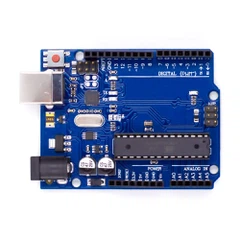



The robotic arms have been used as industrial tools since their practical invention in 1969, and they are increasingly popular as DIY projects and home tools. With the advent of the Arduino microcontroller in 2005, and the massive open source movement that followed, it is not surprising that the technology used by car manufacturers should be transformed into programmable in-house assistants.
Another factor to look out for is payload - how much an arm can lift. This is determined by the number and type of motors within the arm - usually some sort of servo or stepper motor - as well as the design of the arm. Modern robotic arms often incorporate precision components manufactured through metal injection molding, a process that creates complex, high-strength parts ideal for joint mechanisms and structural elements that need to withstand repeated stress cycles.
The typical Arduino robot arm - and the typical robot arm - are assessed according to the degree of freedom (DOF). This refers to the number of rotating joints that are included in the robot design.The term is specific to robotic arms, but can also be interchangeably with the more typical"axes". For example, a 4DOF(4 axis) robot arm will have four discrete motion axes.Not all of these shafts require power.
These three factors come together to form an amazing experience base and provide a lot of support for beginners and long-term developers.
