



Large Format 3D Printer: Industrial Applications, Speed & Material Options
A Large Format 3D Printer makes big and complex parts from digital files. You can use it to make things faster and save money in your business. Many companies pick these printers because they do not need costly tooling or molds. They also help lower inventory costs and let you make things when you need them.
The global market is worth USD 1.5 billion in 2024. It may grow to USD 5.2 billion by 2033. It grows at 15.5% each year.
You get faster prototyping, quick design changes, and better scalability. These are important benefits over old methods.

Key Takeaways
Large Format 3D Printers make big parts fast. This saves time and money for companies. These printers help make new designs quickly. They let companies change designs faster. This helps them keep up with others in the market. Using a Large Format 3D Printer means less wasted material. It also lowers the cost of workers. The printer can make hard parts in one piece. You can use many types of materials in these printers. Some materials are very strong and last a long time. Adding these printers to work routines makes things run better. It also helps check quality more easily. This leads to better results in making products.
What Is a Large Format 3D Printer?
A Large Format 3D Printer can make much bigger parts than regular desktop models. You can print objects that are larger than 500 × 500 × 500 mm. This big size lets you make large prototypes, tools, or finished parts in one piece. It saves you time and means you do not need to put many pieces together.
Key Features
Large Format 3D Printers have special features that make them different from smaller ones:
Build volumes can be as big as 1200 × 1000 × 1000 mm. You can print large parts all at once.
Heated print beds keep prints from warping and help make better parts, especially when printing big things.
Industrial-grade components like strong frames and powerful motors help the printer work well and give you accurate results.
|
Specification |
Description |
|---|---|
|
Build Volume |
You can print large parts up to 1200x1000x1000mm in one job. |
|
Heated Print Bed |
It keeps prints stuck to the bed and stops warping. |
|
Industrial-Grade Components |
Strong frames, tough motors, and good extruders help make parts precise and reliable. |
Tip: If you pick a Large Format 3D Printer, you can print bigger and more detailed parts without breaking them into smaller pieces.
Industrial Advantages
There are many good things about using a Large Format 3D Printer for your business:
High print speed helps you work faster and get products ready sooner.
Dual extruder systems let you print tricky designs and use more than one material at the same time.
Precision and accuracy make sure your parts fit strict rules for making things.
You can print parts up to eight times faster than with smaller printers. This saves you lots of time.
Printing big parts in one go means less time putting pieces together and lower labor costs.
You can make complicated shapes that old methods cannot do.
You waste less material, which saves money and helps the environment.
A Large Format 3D Printer helps you work better, spend less, and try new designs in factories and businesses.
Why Choose Large Format 3D Printers for Industry?
If you want to make more products, a Large Format 3D Printer is a good choice. It works fast and can print big parts. You can use many types of materials. These printers help you finish jobs quicker and spend less money. You get more value for your business. You can meet short deadlines and do hard projects. You can make strong parts for tough jobs in telecom, EPC, and distribution.
Speed and Efficiency
You need to work fast to stay ahead. Large format 3D printers print quickly. This helps you finish jobs before others. You can change plans fast if the market changes.
|
Printer Model |
Print Speed (mm/sec) |
Technology |
|---|---|---|
|
Essentium HSE™ 280i HT |
500 |
FDM/FFF |
|
Pantheon HS3 |
300 - 500 |
FDM/FFF |
|
FLSUN Super Racer (SR) |
200 |
FDM/FFF |
Most regular 3D printers are slower. They print at less than 100 mm/sec. Large format machines print up to five times faster. This helps you finish jobs sooner and work better.
Note: SLA technology is the fastest for big parts. It makes smooth surfaces and fine details. FDM printers let you use more materials. They cost less for big, strong parts.
You save time by printing big parts in one piece. You do not need to put pieces together. You make fewer mistakes. In car design, you can print full-size parts in one go. This means less work and less fixing after printing.
|
Benefit |
Description |
|---|---|
|
Production Efficiency |
Print big parts as one piece. No need for assembly. |
|
Reduced Lead Times |
Faster work means you finish projects sooner. |
|
Cost Savings |
You spend less on fixing parts and waste less material. |
Part Size and Complexity
You can print much bigger parts with a large format 3D printer. This helps your business do more.
|
Feature |
Large Format Printers |
Traditional Printers |
|---|---|---|
|
Maximum Build Size |
Up to 2000x1000x1000 mm |
Usually microwave-sized |
|
Definition of Large Printer |
0.2 cubic meters and up |
Up to 20 cm |
|
Typical Build Volume |
Over 200x200 mm |
Smaller build volumes |
|
Efficiency Gains |
Print more things at once |
More work to put together |
You can make big parts without glue or welding. This is important for planes and cars.
You can print many things at the same time. This saves money and work.
You can make hard shapes that old ways cannot do.
You can print hollow parts and special shapes without extra tools.
You can change designs easily by editing the digital file.
Tip: Printing big, tricky parts in one go helps you avoid delays and mistakes from putting pieces together.
Dual Extrusion and Multi-Material Printing
You need choices for different jobs. Dual extrusion and IDEX systems give you more ways to print.
|
Feature |
IDEX |
Fixed Dual Extrusion |
|---|---|---|
|
Print Quality |
Each extruder keeps prints clean |
Two extruders may cause problems |
|
Material Contamination |
Clean layers, no mixing |
Mixing can mess up layers |
|
Heat Management |
Idle extruders stay cool |
Close extruders can get too hot |
Duplication Mode: Print two of the same part at once. This doubles your work speed.
Mirror Mode: Print a part and its mirror at the same time. This saves even more time.
You can use two materials in one print. For example, a strong base and a support that dissolves. This helps with hard shapes.
IDEX systems help you avoid mistakes and keep prints neat. This is important for good parts in factories.
You can print at high temperatures, up to 450°C. This lets you use special materials like PEEK, PEKK, and ULTEM 9085. These materials work well in tough places and meet strict rules.
|
Feature |
Description |
|---|---|
|
Temperature Capabilities |
Up to 450°C for strong materials like PEEK and PEKK. |
|
Heated Build Plate |
160°C heated plate helps stick high-temp materials. |
|
Constant Temperature Chamber |
90°C chamber keeps printing conditions steady. |
|
Material Compatibility |
Can print both easy and tough materials (ABS, Nylon, PLA, PEEK, PEKK). |
Note: High-temp printing lets you make strong, light parts for hard jobs.
A Large Format 3D Printer gives you speed, size, and material choices. You can finish jobs faster, spend less, and help your customers in new ways.
Industrial Applications of Large Format 3D Printers
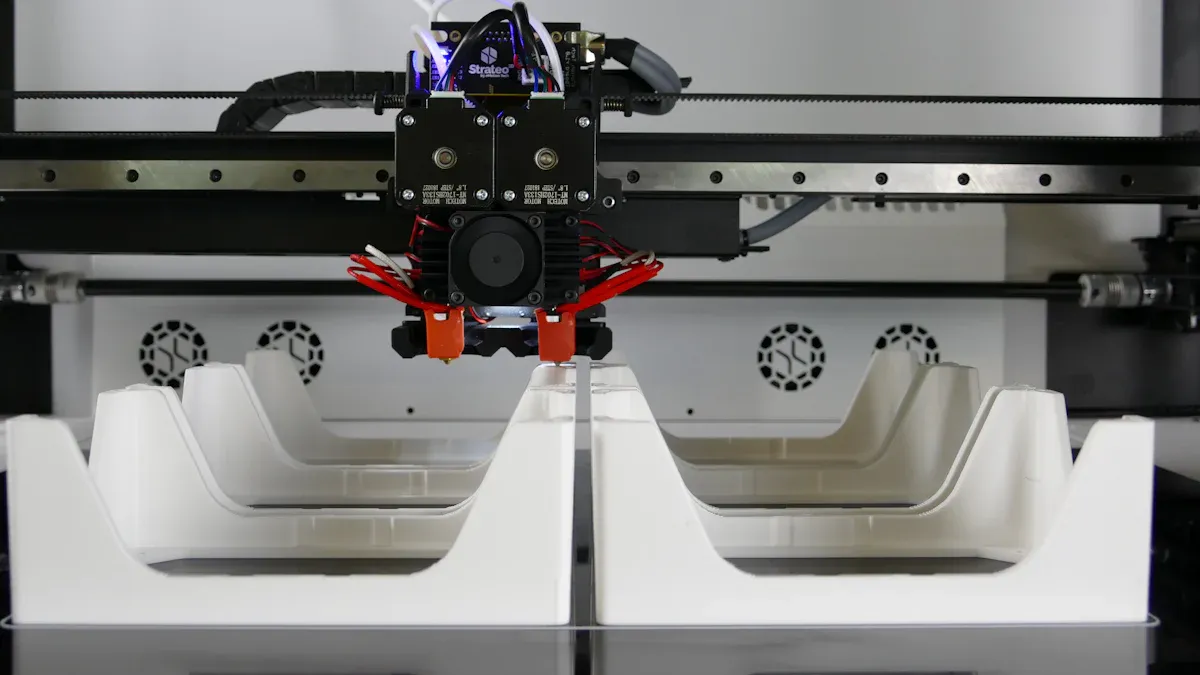
Image Source: unsplash
Large format 3D printing is changing how things are made in many industries. You can make bigger, stronger, and more detailed parts faster than before. This technology helps you save money and get products out quicker. It also lets you try new ways to do business. Let's see how these printers help in aerospace, automotive, manufacturing, and construction.
Aerospace
Aerospace needs parts that are exact and dependable. A Large Format 3D Printer lets you make full-size test parts, special tools, and real airplane parts. You can print landing gear covers, control board models, and many jigs and fixtures for each plane. This saves money and time.
|
Application Type |
Description |
|---|---|
|
Prototyping |
Make models like landing gear covers and control boards. |
|
Pre-production tooling |
Create cheap tools for molding and jigs. |
|
Production of end-use parts |
Print medium-sized orders, like inside airplane parts. |
|
Customization |
Change parts for each plane to make them lighter and better. |
|
Jigs and fixtures |
Print many fixtures for each plane, saving money and time. |
|
Aesthetic components |
Make door handles and dashboards that look good. |
|
Structural components |
Print small batches of metal brackets for mounting. |
|
Advanced engineering materials |
Use cool shapes to make parts work better and weigh less. |
Boeing uses over 300 3D-printed parts in the 777x. This helps the plane use 12% less fuel and costs 10% less to run. Airbus puts more than 1,000 3D-printed parts in the A350 XWB. This makes the plane lighter and more dependable.
You can also help telecom and data centers by printing custom brackets, cable guides, and boxes for FTTH or overhead line jobs. This helps you follow tough rules and finish work faster.
Automotive
Car makers always need to make new things and save money. Large format 3D printing lets you make test parts, special tools, and even real car parts quickly.
|
Application Type |
Description |
|---|---|
|
Prototyping |
Print working models for tests and small batches. |
|
Customization |
Change steering wheels, seats, and dashboards for each customer. |
|
Production Efficiency |
Go from test parts to making many different kinds of cars. |
You can make test parts and tools right at the factory. This cuts wait times from weeks to just hours.
Toyota uses 3D printing for test parts, jigs, and tools. This makes building cars easier and cheaper.
You waste less material and can change designs fast when the market changes.
You can print big, tricky parts for electric car batteries or special cable holders for data centers. This helps you give fast, good service to telecom companies and EPCs.
Manufacturing
Factories want to work better and spend less. Large format 3D printing lets you make special jigs, gauges, and robot tools when you need them.
|
Application Type |
Industry |
Benefits |
|---|---|---|
|
Custom Jigs |
Automotive |
Less downtime, better work |
|
Gauges |
Industrial |
Makes work smoother |
|
End-of-arm Tooling |
Robotics |
Make tools when you need them |
|
Jigs and Fixtures |
Automotive |
Big boost in how well things run |
|
Tooling |
Various |
Save money and make more parts |
You can print exact tools for telecom jobs, like fiber cable guides or splicing holders.
You can help EPC projects by making special parts overnight.
You cut downtime and lower repair risks by making spare parts fast.
Large format 3D printing lets you offer new things, like quick test parts and making things on demand. This helps you earn more and win more jobs.
Construction
Now you can build faster and greener with large format 3D printing. This tech lets you print building parts, models, and even whole buildings.
The 3D Print Canal House in Amsterdam was the first 3D-printed house. It shows how you can solve housing problems in new ways.
Dubai's 3D-printed office building shows how this tech works for big, cool projects.
In Antwerp, a 3D-printed house shows how you can build green, custom homes.
You get:
Faster building times than old ways.
Lower worker costs and less wasted material.
You can use recycled or local stuff, which is good for the planet.
You make less pollution because you can print parts right where you need them.
You can print custom boxes for telecom gear, cable trays for data centers, or covers for utility lines. This helps you meet the needs of telecom companies, EPCs, and sellers while keeping costs down.
Material Options for Large Format 3D Printing

When you pick a Large Format 3D Printer, you can use over 25 advanced materials. These materials help you follow strict rules and make strong parts for tough jobs. You can choose thermoplastic powders, pellets, or liquid resins for your project.
|
Material Type |
Examples |
|---|---|
|
Thermoplastic Powders |
Rilsan® PA11, Orgasol® PA12, Kepstan® PEKK, Pebax® TPE |
|
Thermoplastic Pellets |
Kynar® PVDF, Kepstan® PEKK, Pebax® Elastomers |
|
Liquid Resins |
N3xtDimension® solutions by Sartomer |
High-Performance Polymers
Some jobs need high-performance polymers for extra strength and heat resistance. The PAEK family, like PEEK and PEKK, is very strong and can take heat up to 260°C. PEI (Ultem) is good for heat, chemicals, and fire. These materials are used in aerospace, cars, and medical fields. They can replace metal parts and still work in hard places.
PAEK Family Polymers: PEEK, PEKK, PEK, PEKEKK, and PEEKK are strong and resist chemicals and wear.
PEI (Ultem): Works well in hot and stressful jobs.
Tip: Pick high-performance polymers if your parts need to handle heat, chemicals, or heavy use.
Composites and Specialty Materials
Composites, like carbon fiber blends, make parts stronger and lighter. You get metal-like strength but less weight. This is important for planes and cars, where weight matters a lot.
|
Feature |
Benefit |
|---|---|
|
Superior Mechanical Properties |
Parts last longer and stay strong |
|
Lightweight Components |
Easier to move and install |
|
Precise Material Control |
You can set fiber direction for special needs |
Aerospace: Needs strong, light parts for safety and saving fuel.
Automotive: Uses composites for tough, light parts.
Manufacturing: Gets new uses with advanced materials.
Material Selection for Demanding Environments
You need to pick materials that can handle stress, heat, and chemicals. The right material helps your parts last longer and saves on repairs.
|
Property |
Importance in Harsh Environments |
|---|---|
|
Strength |
Stops parts from breaking |
|
Durability |
Handles lots of use |
|
Flexibility |
Bends without breaking |
|
Chemical Resistance |
Stays safe around harsh chemicals |
|
Heat Resistance |
Works in hot places |
Open material systems let you try new materials as they come out. Flexible build plates help you take off finished parts easily. This saves time and keeps parts from breaking.
Note: Picking the right material helps you meet IEC, ITU, and IEEE rules for telecom, EPC, and industry jobs. You get parts that last longer and work better.
Supporting Technologies and Workflow Integration
Modern large format 3D printers use new technology to help you work faster and make fewer mistakes. These systems help your work go smoothly and help you get more from your printer.
Software Automation
Software automation helps you do more work with large format 3D printers. These programs connect robots, sensors, and smart software to make your job easier.
Caracol's Vipra AM platform uses robots and sensors with special software to help you work better.
Aibuild's platform lets you use easy visual programming. You do not need to write code, so you save time and make fewer mistakes.
Robots and AI do post-processing jobs for you. Smart part recognition picks the right finishing steps for each part.
Adaptive surface treatment changes settings using sensor feedback.
Aibuild's software helps you set up machine programs and share data between CAD tools and finishing machines.
Modular post-processing units let you switch between printing, machining, and finishing by themselves.
Automation helps you finish jobs faster, do less manual work, and get the same results every time. You can spend more time on important tasks while the system does the boring work.
Quality Control
You want good parts every time. Quality control systems in large format 3D printing help you follow strict rules.
A Quality Management System (QMS) tracks each step of making parts. You can see every detail and prove you followed the rules.
Proactive quality control means you keep getting better. You find problems early, not after you finish.
In aerospace, you must follow tough rules for tracking and measuring parts. These systems help you make parts that meet those rules.
Good quality control helps you earn trust from customers and lowers the chance of expensive mistakes.
Integration with Manufacturing Systems
You can add large format 3D printers to your factory if you follow the right steps.
Check your factory and plan how to fit large printers with your other machines.
Do Factory Acceptance Tests (FAT) and Site Acceptance Tests (SAT) before you start using the printers. This makes sure everything works right.
Teach your workers how to use and take care of the new printers.
Set up support with skilled engineers. This keeps your printers working and stops long breaks.
Good integration helps you get more from your printer. You lower repair risks and make your workflow better for a long time.
A large format 3D printer helps your business work faster. You can make bigger parts and use many materials. This means you finish jobs sooner and spend less money. You can find new ways to help your customers.
You save money by making test parts quickly and close to home. You also waste less material.
You earn more by selling custom products and launching them faster.
|
Key Consideration |
What to Check |
|---|---|
|
Print Quality |
Look at sample prints and reviews |
|
Support & Warranty |
Make sure the company helps you |
Pick a large format 3D printer to work better and stay ahead of others.
FAQ
Why should you invest in a large format 3D printer for your business?
You can make things faster and spend less money. You can print bigger parts for your projects. These printers help you finish work on time and do hard jobs. You get more value and lower repair risks.
Why do large format 3D printers offer better speed and efficiency?
You can print big parts all at once. You do not need to put pieces together. This saves time and helps you finish faster. Some printers work at 500 mm/sec. You finish jobs quicker than old ways.
Tip: Printing fast helps you keep up with changes and help customers quickly.
Why are material options important for large format 3D printing?
You can pick from more than 25 special materials. This helps you follow tough rules and make strong parts. You can use these materials for telecom, EPC, and distribution jobs.
Why do B2B companies prefer large format 3D printers for industrial applications?
You can make custom tools and parts when you need them. You save money by using less material and needing fewer workers. You can try new ways to do business and make more things.
Why does workflow integration matter with large format 3D printers?
You can link printers to your other machines. You can use computers to do jobs and check quality. This means less downtime and better work for a long time.