





3D Printer Material: Types, Properties, and Applications in Additive Manufacturing
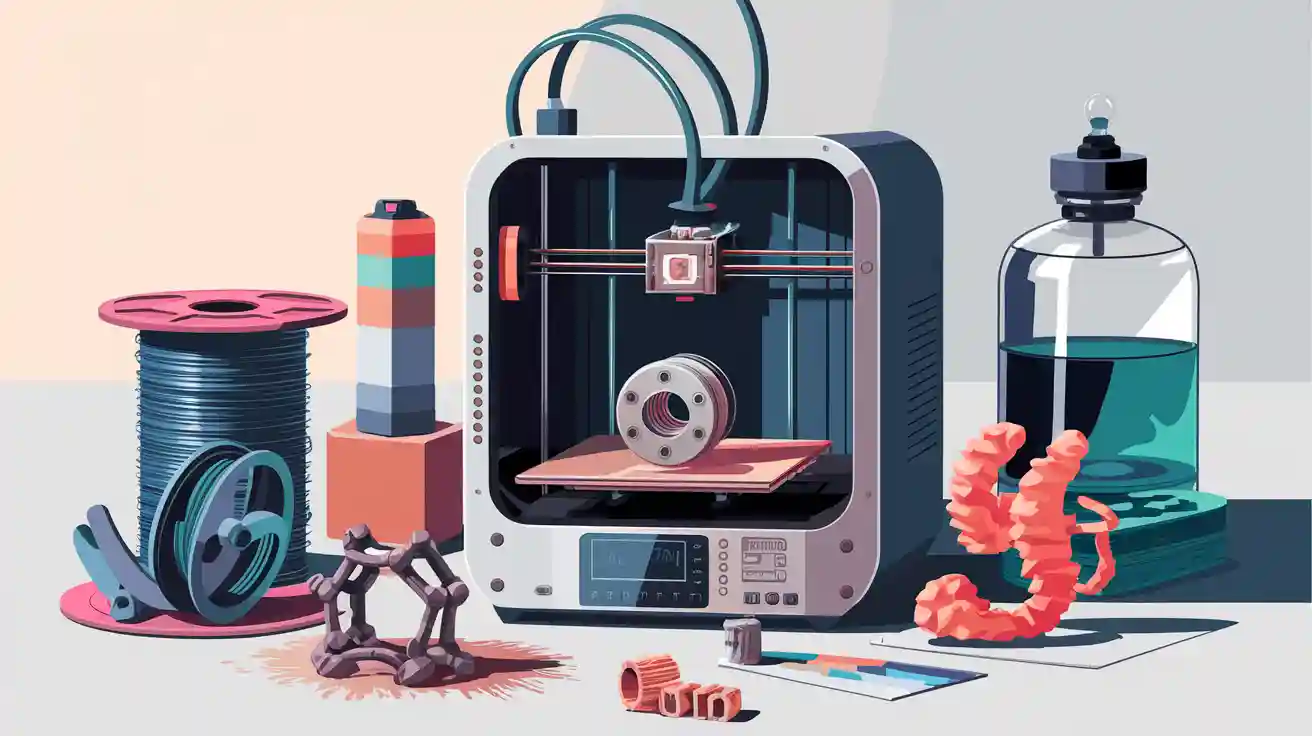
3D Printer Material means the stuff you use to make things with additive manufacturing. The material you pick changes how good your product is, how much it costs, and how creative you can be. For example, the table below shows how different printers and materials change the cost for each part:
|
Printer Model |
Filament Usage (g) |
Cost per kg (€) |
Material Cost per Ring (€) |
|---|---|---|---|
|
Ultimaker 2+ CONNECT |
2.9 |
42.99 |
0.17 |
|
Creality K1 MAX |
2.835 |
23.14 |
0.07 |
|
Prusa MK4 |
2.85 |
29.99 |
0.09 |
You may have problems like not having many material choices, trying to balance different properties, and dealing with extra steps after printing. These things can change how much money you make, how fast you work, and if you can do what the industry wants.
Key Takeaways
- Picking the right 3D printer material is very important. It changes how good your product is. It also affects how much you spend and what you can make. Always choose materials that fit your project needs.
- Each material has its own special features. For example, PLA works well for fast tests. Nylon is better for strong and tough parts. Learn these differences to pick the best material.
- Think about the price when you pick materials. Try to balance cost and how well it works. This helps you not spend too much but still get good quality. Cheap materials are not always the best choice.
- It is important to trust your supplier. Work with suppliers who are reliable. This makes sure you get your materials on time and they are good quality. It helps you avoid delays and mistakes.
- Safety and caring for the environment are important. Wear the right safety gear when using 3D printer materials. Dispose of waste the right way to keep your team and the planet safe.
3D Printer Material Types
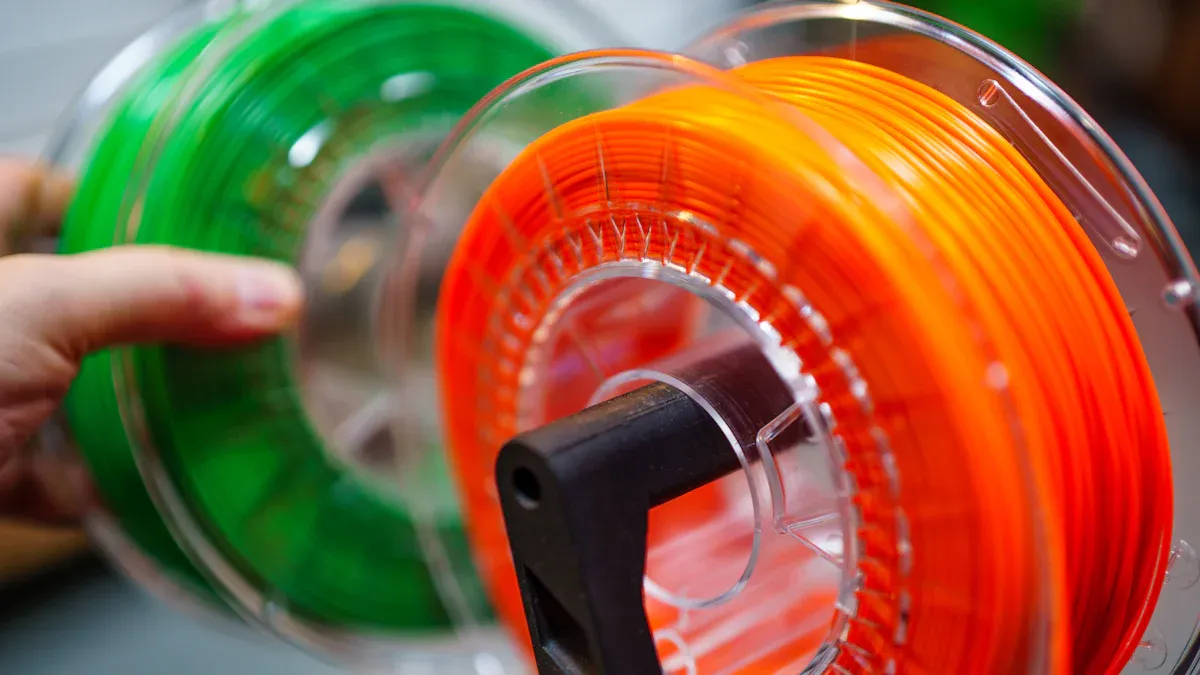
Picking the right 3D Printer Material is very important. You should know the main groups in additive manufacturing. These groups are plastics, metals, ceramics, composites, and specialty materials. Each group has special features and uses. This can change how fast you work and how much money you make.
Plastics (PLA, ABS, PETG)
Plastics and polymers are used a lot in FDM and SLS. They are popular because they are cheap and easy to use. You can use them for testing ideas or making final products. Here are some types and what they do:
- Polylactic Acid (PLA): Breaks down easily, simple to print, does not bend much, good for quick tests.
- Acrylonitrile Butadiene Styrene (ABS): Strong, lasts long, does not break easily, needs careful heat control.
- Polyethylene Terephthalate Glycol (PETG): Stays safe with chemicals, bends a little, prints easily.
- Thermoplastic Polyurethane (TPU): Bends well, feels like rubber, does not wear out fast.
- Nylon (Polyamide): Very tough, does not wear out, great for working parts.
Tip: Use PLA for fast tests and school projects. ABS and PETG are good for simple factory jobs. Nylon is best when you need strong and bendy parts.
Metals (Stainless Steel, Titanium)
Metal 3D Printer Material helps you make strong parts for hard jobs. DMLS and SLM printers use metals like stainless steel and titanium. These metals are tough and last long. You can make many designs with them.
|
Metal Type |
Advantages |
Limitations |
Typical Uses |
|---|---|---|---|
|
Stainless Steel |
Does not rust, safe for food |
Costs more, needs extra steps |
Boats, food tools, machines |
|
Titanium |
Very strong, not heavy |
Small build size, expensive |
Planes, medical parts |
You can make custom metal parts fast. But metal printers cost a lot and need extra work after printing. You need special papers like Material Test Reports and Certificates of Conformance for planes and hospitals.
Nylon and SLS Materials
Nylon and SLS materials are strong and bend well. SLS printers use nylon powder to make tough test parts and finished products. You can use these in many fields:
- Aerospace: Light parts, fast tests, tools.
- Automotive: Custom pieces, air tubes, working samples.
- Medical: Fake limbs, surgery helpers, device samples.
- Consumer Goods: Glasses, sports gear, covers for electronics.
- Industrial Manufacturing: Tooling, small batch making.
- Fashion: Jewelry, new fabrics, shoes.
- Robotics: Main parts, moving pieces.
Note: Nylon is great because it is tough and does not wear out. It works well for making tools and strong finished parts.
Ceramics and Composites
Ceramics and composites give you more choices for special jobs. Ceramics are hard to use because they melt at high heat and can break easily. New ways like extrusion and jetting help you use ceramics better. You often use a wet mix to make parts before heating them.
|
Property |
Description |
|---|---|
|
Material Combination |
Mixes two or more things for better results. |
|
Customization |
Lets you control how the material is made. |
|
Enhanced Properties |
Makes the material stronger and better in heat or use. |
Composites like chopped fiber plastics and long fibers (carbon fiber, fiberglass, Kevlar) are tough. They do not get damaged by sun, chemicals, or heat. These are good for planes, cars, and factories.
Specialty Materials
Sometimes you need special 3D Printer Material for hard jobs. These include:
- Polycarbonate: Medium strength, tough, does not melt easily.
- PEEK/ULTEM: Super strong plastics for hard factory parts.
- Chopped Fiber Reinforced Plastics: Stronger for tough places.
- Continuous Fibers: Carbon fiber, fiberglass, Kevlar for light and strong parts.
- TPE: Bends easily for special uses.
Pick special materials for making new products, tools, or finished parts. Planes and cars use metal printing for light and strong parts. Make sure your material has the right papers like AS9100 for planes or ISO 13485 for medical tools.
Alert: Always check material papers and trust your supplier. This keeps your business safe and makes sure your products are good.
3D Printer Material Properties
When you pick a 3D Printer Material, you need to know its properties. These properties tell you how your parts will work. They also show how much money you will spend. You must check if your parts meet what the industry needs. Look at things like mechanical, thermal, and chemical features. Also, think about how easy it is to print and how much it costs. Each property can change your results and your profits.
Mechanical Properties
Mechanical properties tell you how strong and tough a material is. You want parts that last and do not break when used. For factories, you should look at these important things:
- Durability: The material should handle heavy use and not break.
- Tensile Strength: Parts should not snap or stretch when pulled.
- Heat Resistance: The material should not melt in hot places.
- Flexibility or Rigidity: Pick flexible materials for bending parts. Use rigid ones for hard shapes.
- Chemical and UV Resistance: Parts should stay strong in sunlight or with chemicals.
- Moisture Resistance: Pick materials that do not swell or change when wet.
|
Property |
Description |
Example Material |
Typical Use Case |
|---|---|---|---|
|
Durability |
Handles repeated stress |
Nylon |
Gears, hinges |
|
Tensile Strength |
Resists pulling forces |
Stainless Steel |
Machine parts |
|
Flexibility |
Bends without breaking |
TPU |
Seals, gaskets |
|
Rigidity |
Holds shape under pressure |
ABS |
Enclosures, brackets |
|
Heat Resistance |
Does not melt at high temperatures |
PEEK |
Aerospace, automotive |
|
UV Resistance |
Stays strong in sunlight |
ASA |
Car exterior components |
|
Moisture Resistance |
Does not change with water exposure |
PETG |
Medical devices |
Tip: Always check mechanical properties before picking a material. Stronger materials may cost more. But they help you avoid broken parts and wasted time.
Thermal Properties
Thermal properties show how a material acts with heat. If you work with cars or planes, you need parts that do not bend in heat. Materials like PEI and PEEK can handle over 200°C. These are good for hard jobs. PLA and ABS can get weak or bend if they get hot.
Materials with high heat distortion temperatures are best for engines.
You must set the right print temperature to stop warping.
Good thermal stability means your parts keep their shape.
|
Material |
Heat Distortion Temp (°C) |
Suitable For |
|---|---|---|
|
PEI/ULTEM |
>200 |
Automotive, aerospace |
|
PEEK |
>200 |
Medical, industrial |
|
ABS |
~90 |
Consumer, prototypes |
|
PLA |
~60 |
Education, quick tests |
Note: Use high-temperature materials for parts near engines. Set the printer right to get smooth and strong parts.
Chemical Resistance
Chemical resistance is important if your parts touch oils or acids. You want materials that do not break down or get weak. ASA is good for car outsides because it resists sunlight and chemicals. PEI (ULTEM) is strong against heat and chemicals. You see it in medical and electronic parts.
|
Material |
Chemical Resistance |
Applications |
|---|---|---|
|
ASA |
Excellent UV and chemical resistance |
Automotive exterior, outdoor devices |
|
PEI/ULTEM |
High resistance to heat and chemicals |
Aviation, medical, electronics |
|
Various |
Resists acids and solvents |
Chemical processing, lab equipment |
Pick materials with strong chemical resistance for labs and cars.
Chemical resistance helps your parts last longer and stay safe.
Alert: Always check chemical resistance before using a material in tough places. This keeps your money safe and your products strong.
Printability
Printability tells you how easy it is to make parts with a material. You want materials that print well and do not cause problems. Things like shrinkage, layer thickness, and detail size matter.
|
Factor |
Description |
|---|---|
|
Material Shrinkage |
Uneven shrinkage can cause warping and defects. |
|
Layer Thickness |
Affects accuracy and how well parts stick to the print bed. |
|
Minimum Feature Size |
Limits detail and precision in your parts. |
|
Build Size |
Decides how large your printed part can be. |
Good printability means fewer failed prints and less waste.
You save time and money when your material prints well.
Tip: Test printability before big projects. Good materials help you finish on time and save money.
Cost Factors
Cost factors tell you how much you spend on materials and printing. You must balance price and how well the material works. Cheap plastics are good for simple jobs. Better plastics cost more but work better. Metals cost the most and are for hard jobs.
|
Material Type |
Cost Implication |
|---|---|
|
Commodity Plastics |
Least expensive, good for basic uses. |
|
Engineering-Grade Plastics |
Moderately priced, better properties. |
|
High-Performance Plastics |
Expensive, needed for tough jobs. |
|
Metals |
Most expensive, used for critical parts. |
|
Material Quantity |
Bigger parts use more material, raising costs. |
|
Material Waste |
Waste increases total material costs. |
|
Part Geometry & Design Complexity |
Complex shapes need more material and time. |
|
Post-Processing Requirements |
Cleaning and finishing add extra costs. |
|
Labor & Overhead |
Skilled workers and quality checks cost more. |
Plan your budget based on material, part size, and design.
Good materials lower waste and save money over time.
Note: Spending more on good materials and skilled workers is smart. You get better parts, fewer problems, and more value.
Applications in Additive Manufacturing

Prototyping
3D Printer Material helps you make prototypes fast. Many industries use it to test ideas and fix designs before making lots of products. In transportation, you print trays to hold parts. This helps you send orders on time. Car companies use 3D printing to set up new lines faster. They can save up to three weeks. This makes work more efficient. Factories use prototypes for machines and tools. This cuts waiting time and helps things work better.
|
Industry |
Application Description |
Benefits |
|---|---|---|
|
Transportation |
Prototypes for trays securing components during production |
Timely order fulfillment |
|
Automotive |
Faster integration for new assembly lines |
Increased production efficiency |
|
Manufacturing |
Machinery, equipment, and tooling aids |
Enhanced performance, reduced lead times |
3D printing lets you change plans quickly and meet customer needs.
End-Use Parts
You can use 3D printing to make real parts for products and factories. GE Aviation prints fuel nozzles for its LEAP engine. This saves about $3 million for each plane every year. Johnson & Johnson uses 3D printing for special surgery tools and implants. This helps patients get better results. Oreck saves 65% on vacuum cleaner pallet costs. Soundz makes tweeter grills much faster. BMW makes assembly tools lighter by 72%.
- SLS melts nylon powder for strong parts.
- MJF uses nylon polymers for solid pieces.
- FDM builds parts with thermoplastic filaments.
- You save money, get parts faster, and can make custom shapes.
Medical and Dental
3D printing is used in medical and dental work. It helps make fake teeth, implants, and braces. Dentists use it for crowns, dentures, and special trays. Common materials are titanium, cobalt-chromium, zirconia, aluminum oxide, PEEK, and PMMA. These help make implants and devices that fit each patient.
- Custom guides and implants help doctors do better surgery.
- Braces and face prostheses make patients more comfortable.
- Medical 3D printing brings new ideas and better care for patients.
Aerospace and Automotive
Aerospace and car makers use advanced 3D Printer Material to make parts lighter and stronger. Special plastics can replace metal parts. This makes things lighter but still tough. Lattice shapes and smart designs lower weight by 25–30% in airplane parts. This saves fuel. You can print brackets and blades with up to 55% less weight. This helps save money and fuel.
- Light parts make vehicles faster and cheaper to run.
- Hard shapes are easier to make, so designs can change.
- 3D printing helps these industries grow and save money for a long time.
Consumer and Education
People use 3D printing for products and learning. PLA is cheap, easy, and breaks down in nature. It is great for schools. ABS is strong and bends a little. It works well for electronics and tough products.
|
Material |
Description |
Applications |
|---|---|---|
|
PLA |
Affordable, easy, biodegradable |
Prototyping, classroom projects |
|
ABS |
Strong, resilient, slightly flexible |
Electronics, durable consumer goods |
3D printing lets students and designers make, test, and improve things with easy materials.
Choosing the Right 3D Printer Material

Matching Properties to Needs
You need to pick materials that fit your project. Every job needs something different. You should look at a few things before you decide. The table below shows what is important:
|
Criteria |
Description |
|---|---|
|
Material Strength |
Makes sure your product works well and lasts long. |
|
Compatibility |
Works with your machines and how you do things. |
|
Environmental Factors |
Handles tough places and helps the planet. |
|
Compliance with Standards |
Follows rules like ASTM, ISO, or DIN for safety and quality. |
|
Cost Predictability |
Lets you plan money and stops surprises. |
|
Sourcing Ease |
Makes it easy to get materials fast when needed. |
|
End-Use Requirements |
Meets special needs, like fighting wear or chemicals. |
Tip: Always check these things before you buy. This helps you save money and keeps your work running smoothly.
Budget and Compatibility
You need to think about money and how well materials work. Some materials cost more but work better. Cheaper ones may not last as long. Make sure the material fits your 3D printer. Look at things like nozzle temperature and print speed to avoid problems.
- Check your budget and compare prices to get the best deal.
- Make sure the material matches your printer's needs.
- Pick materials that do not slow you down or cost extra.
Safety and Environment
Safety and caring for the planet are important for every project. You keep your team safe and help the earth by doing things right.
- Use good airflow to lower fumes and dust.
- Wear safety gear when you touch materials.
- Throw away chemicals the right way to stop pollution.
- Find out what chemicals are in your materials.
- Follow safety steps, like wearing safety gear.
- Learn what to do if someone gets exposed.
Note: Safe handling and disposal keep everyone healthy and help you follow the rules.
Supplier Reliability
Good suppliers help you avoid late orders and bad products. You want partners who know what you need and help you reach your goals.
- Check how they get materials and if their process is good.
- Ask if they test materials and share data.
- Make sure they know your industry's rules and limits.
- See if they help with finishing and keeping things safe for the planet.
"Our team at Exponent looked at a metal printer that switched from nickel alloy to aluminum alloy. The workers did not clean out the nickel powder well. This caused nickel to mix in and made the aluminum parts much weaker."
Always ask for papers and help after you buy. This keeps your money safe and makes sure your 3D Printer Material is good enough.
You should learn about 3D Printer Material types and properties. Each material has special features. These features change how strong, nice, or useful your product is.
- Pick materials that are tough, resist heat, or bend as needed.
- The material you choose affects how good your product is. It also changes how fast you work and how much money you make.
- Good suppliers and expert help stop expensive problems. They keep your business safe and strong.
- Work with trusted partners for steady results and growth.
FAQ
Why should you prioritize 3D Printer Material selection for your business?
Picking the right 3D Printer Material makes your products better. It helps you spend less money. You can follow industry rules and get more value. Good choices stop mistakes and slowdowns. This helps you keep up with others and give steady results.
Why do different industries require specific 3D Printer Materials?
Every industry has its own needs. Aerospace wants materials that are light and strong. Medical jobs need materials that work safely in the body. Cars need materials that last a long time. You must pick materials that fit your job. This keeps things safe and working well.
Why does material certification matter in additive manufacturing?
Certification shows your 3D Printer Material is safe and good quality. It protects your business from problems with the law. Certified materials help you get more jobs and build trust. You get steady results and avoid big mistakes.
Why does printability affect your production efficiency?
Printability changes how quickly you can make parts. Materials that print well waste less and save time. You spend less money and finish faster. Good printability helps you make more parts and meet deadlines.
Why should you consider supplier reliability when sourcing 3D Printer Materials?
Reliable suppliers send good materials on time. You do not have to wait or fix bad parts. Trusted partners help with advice and papers. You lower risks and make your supply chain stronger for the future.