

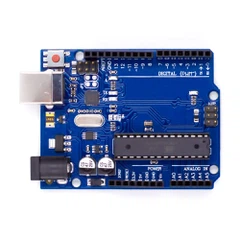
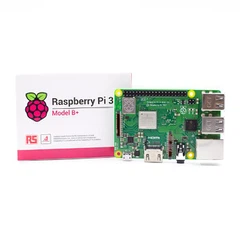


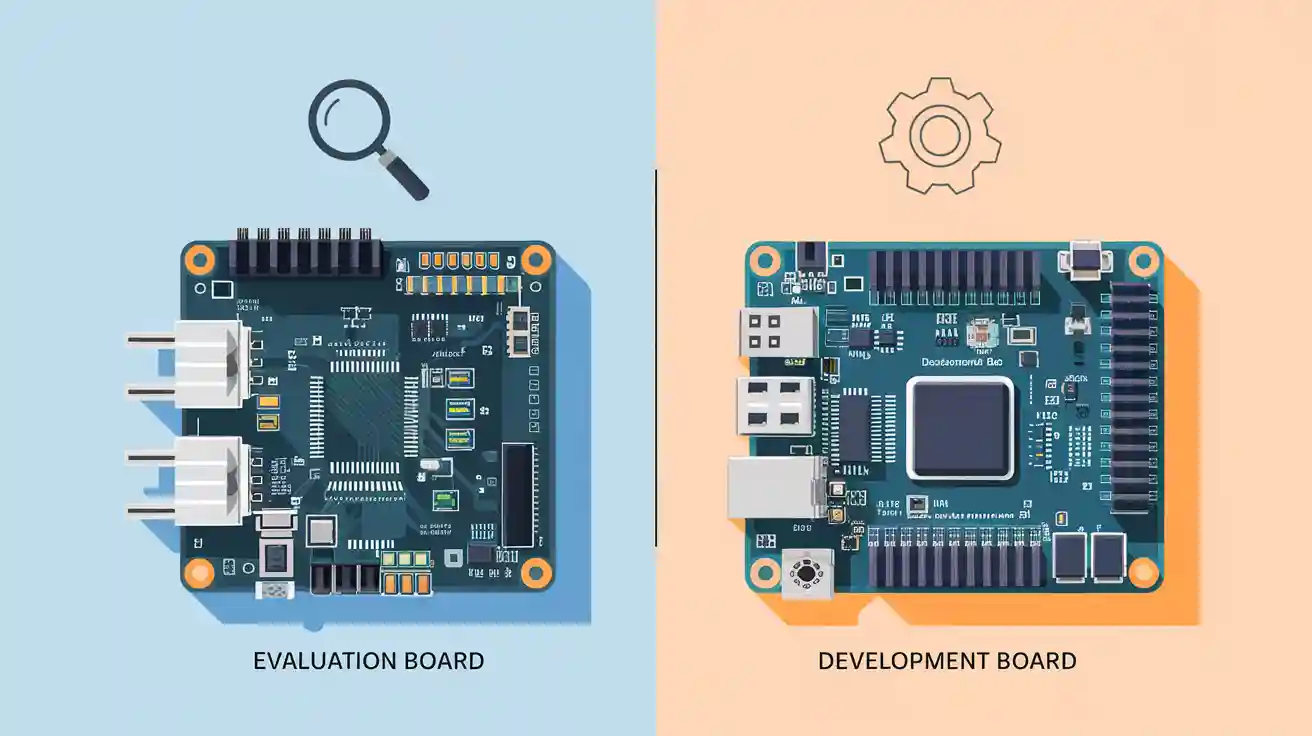
You need to know the main difference between evaluation boards and a development board before starting any electronics project. Evaluation boards let you test and analyze the performance of a specific chip or component. You gain insight into its capabilities and limitations, which helps you decide if it fits your requirements. This distinction guides you to select the right tool, saving time and resources as you work toward your goals.
Key Takeaways
- Evaluation boards are ideal for testing and analyzing the performance of specific chips. Use them to validate features and ensure compatibility before full-scale development.
- Development boards provide a flexible platform for building and refining complete electronic systems. They support multiple components and are great for prototyping and experimentation.
- Choose evaluation boards when you need to verify a single component's behavior. Opt for development boards when your project involves complex applications with various peripherals.
- Both board types have unique features. Evaluation boards focus on performance testing, while development boards offer extensive connectivity and support for diverse projects.
- Always match your board choice to your project goals. This ensures efficient development and helps you avoid costly mistakes.
Evaluation Boards Overview
Purpose
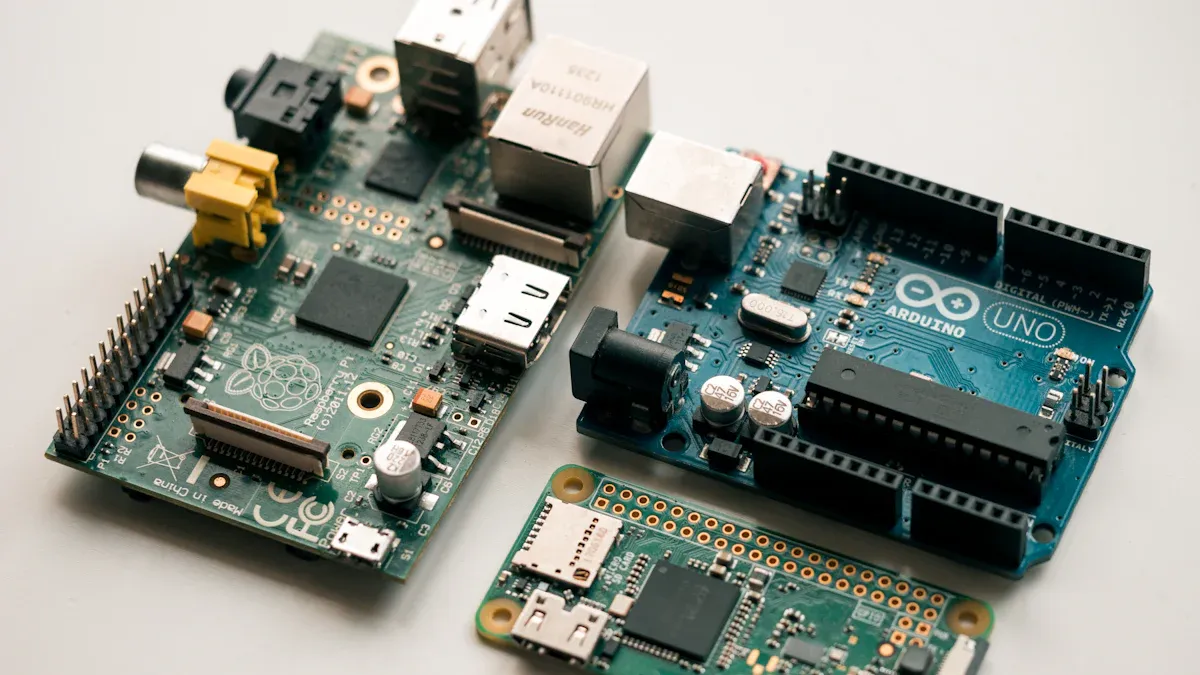
You use evaluation boards to assess and demonstrate the performance of a specific chip or component. Major electronics manufacturers design these boards to help you evaluate, design, and test products and solutions. Evaluation boards allow you to analyze features and performance, which supports informed decision-making. You can reduce development time because these boards provide optimized and tested solutions for application design. Engineers and buyers rely on evaluation boards to understand a component's capabilities before integrating it into a larger system or a development board.
Tip: If you want to validate a chip's real-world behavior before committing to a full project, start with an evaluation board.
Key Features
Evaluation boards offer a wide range of technical features that support thorough testing and validation. You often find multiple communication interfaces, integrated sensors, and advanced debugging support. The table below highlights common features found on evaluation boards for microcontrollers and sensors:
|
Feature |
Description |
|---|---|
|
Communication Interfaces |
I2C, SPI, USART, CAN, RS-232, USB, IrDA, I²S Audio DAC |
|
Power Supply Options |
Power jack, USB connectors, daughter board support |
|
Integrated Sensors |
Humidity, temperature, touch sensing, LDR |
|
Debugging Support |
In-circuit debugging and programming (ST-LINK/V2) |
|
Memory |
Data SRAM, Program SRAM, Flash memory, SPI serial Flash |
|
Display |
TFT color LCD (SPI interface) |
|
Additional Features |
Joystick, reset button, user LEDs, motor control connectors, RTC with backup battery |
|
Extension Connectors |
For daughter or wrapping board connections |
|
MCU Voltage |
Adjustable (2.0 V - 3.6 V) |
|
ADC/DAC |
12-bit ADCs and DACs |
|
Other Components |
MicroSD card, EEPROM, potentiometer, IR receiver |
You also benefit from high-performance signal paths for data acquisition, integrated 24-bit ADCs and DACs, and advanced interrupt controllers for real-time processing. On-chip firmware supports in-circuit serial download and JTAG emulation, making evaluation boards a powerful tool for testing.
Typical Uses
You find evaluation boards in many industrial and academic settings. These boards help configure wireless routers in network management rooms, design signal flows for radio-frequency testbeds, and perform robotic motion planning in calibration stations. You can optimize manipulator trajectories in assembly-line teaching scenarios or inspect protocol packets during industrial diagnostics. Evaluation boards support programming weld sequences in automated welding workcells and orchestrating reagent pipelines in chemical laboratories.
Common application areas include:
Sensor fusion in industrial networking
Embedded vision projects
Automotive system prototyping
Real-time sensor data processing
Robotics and automation
You use evaluation boards when you need to validate a component's performance before moving to a development board for full-scale prototyping. These boards give you confidence in your design choices and help you avoid costly mistakes.
Development Boards Overview
Purpose
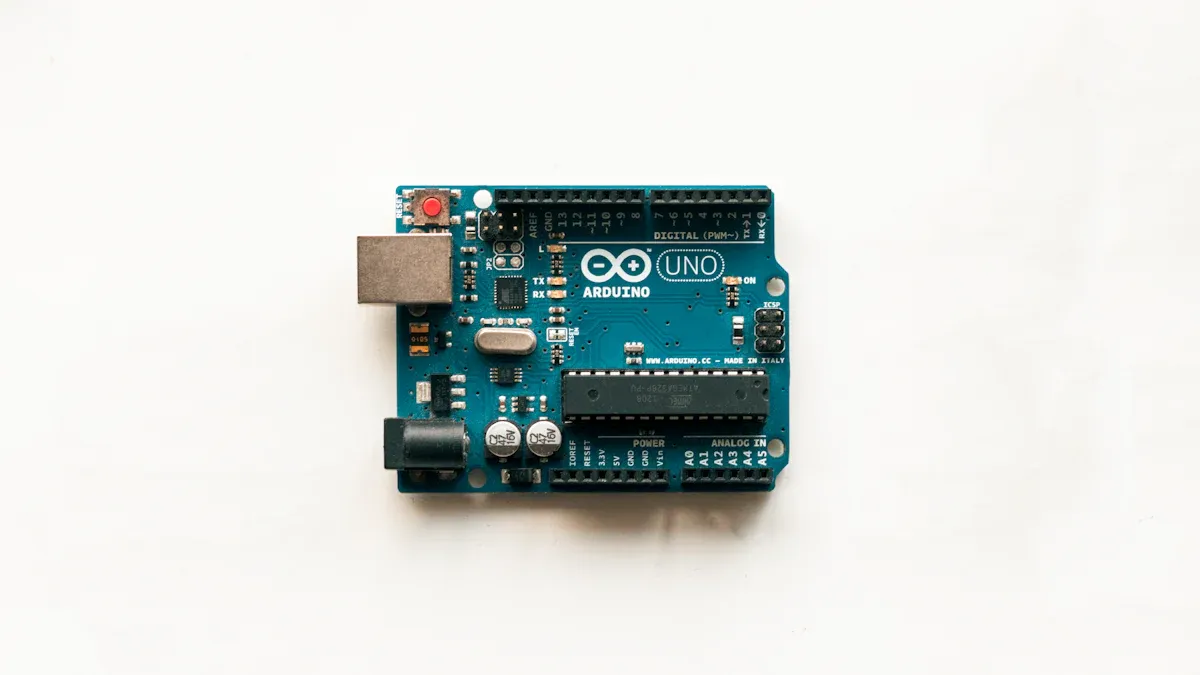
You use a development board as a platform for building, testing, and refining electronic applications. Leading electronics companies design development boards to support prototyping, experimentation, and debugging. You can validate your circuit designs and test embedded systems before moving to full-scale production. Development boards help you reduce design errors and accelerate your time to market. You gain a flexible environment for innovation, which is essential for both learning and product development.
Note: Development boards provide a safe space for you to experiment with new ideas and technologies without risking costly mistakes.
Main Features
Development boards stand out for their versatility and expandability. You find a wide range of input/output ports, memory options, and debugging tools. These boards allow you to connect multiple peripherals, sensors, and modules, making them suitable for complex projects. The table below compares key features of development boards and evaluation boards:
|
Feature |
Evaluation Boards |
Development Boards |
|---|---|---|
|
Purpose |
Evaluate a specific component |
Develop and test applications with multiple ICs |
|
Expandability |
Limited to one component |
Connect multiple boards and peripherals |
|
Connectivity |
Basic interfaces for configuration |
Extensive connectivity for diverse systems |
You often see development boards equipped with microcontrollers, programmable logic devices, and wireless modules. You can use built-in USB, Ethernet, and Wi-Fi interfaces to link your board to computers or networks. Many boards include onboard LEDs, buttons, and displays, which help you interact with your project directly. Debugging facilities such as JTAG and serial monitors make troubleshooting easier.
Common Applications
Development boards play a vital role in education, prototyping, and product development. You use them to quickly build and test embedded systems, simulate real-world scenarios, and validate your ideas. Here are some common applications:
Prototyping and validation: You can create and test embedded systems, reducing the risk of design errors.
Application development: You gain hardware and software support for building diverse solutions, from IoT devices to robotics.
Education and training: You use development boards in classrooms and labs to learn embedded system principles.
Enhancing learning efficiency: You improve your understanding and speed up the development process.
Development boards help you identify design issues early, test multiple ideas, and launch products faster than competitors. You benefit from a cost-effective, user-friendly tool that supports your growth as a hobbyist, student, or professional.
Evaluation Boards vs Development Boards
Intended Use
You need to understand the core purpose behind each board type to make the right choice for your project needs. Evaluation boards focus on helping you test and analyze the performance of a specific chip or component. You use them to validate features, benchmark performance, and ensure compatibility before moving forward with a larger design. These boards often serve as a reference point for engineers and researchers who want to explore the limits of new technology.
Development boards, on the other hand, provide a flexible platform for building, prototyping, and refining complete electronic systems. You use development boards to create, test, and debug applications that may involve multiple components and peripherals. They support a wide range of projects, from educational experiments to advanced product development. You benefit from their versatility and robust support, which makes them ideal for both beginners and professionals.
Tip: If your goal is to evaluate a single component's capabilities, choose evaluation boards. If you want to build and test a full application, select a development board.
Features Comparison
When you compare evaluation boards and development boards, you notice significant differences in hardware, software support, cost, and user experience. The table below highlights these distinctions:
|
Feature/Support Aspect |
Evaluation Boards |
Development Boards |
|---|---|---|
|
Cost |
Higher due to limited distribution |
Generally lower as they are mass-produced |
|
Vendor Support |
Often less consistent, focused on evaluation |
More robust support, suitable for production |
|
Lifespan |
Shorter, may change frequently |
Longer, designed for product integration |
|
Engineering Support |
Limited, primarily for evaluation |
More extensive, includes customization options |
|
OS Support |
May have outdated versions |
Typically more up-to-date and stable |
You also see differences in cost structure and availability. Evaluation boards usually have a lower initial price, but you may need to purchase accessories or pay licensing fees. Their supply can fluctuate due to market trends and component shortages. Development boards often cost more upfront, but you get more features and stable availability thanks to established production lines.
|
Aspect |
Evaluation Boards |
Development Boards |
|---|---|---|
|
Cost |
Generally lower initial cost, but total cost includes accessories and licensing fees |
Higher initial cost due to more features and capabilities |
|
Availability |
Subject to supply chain volatility, especially for components |
More stable availability due to established production lines |
|
Market Trends |
Rapid growth driven by innovation in IoT and embedded systems |
Steady demand in specific sectors like aerospace and defense |
|
Regional Dominance |
APAC region dominates production and consumption |
North America has significant demand due to advanced sectors |
|
Technology Advancements |
Integration of advanced features like wireless connectivity and AI/ML acceleration |
Focus on robust features and compatibility with various systems |
You gain more robust engineering support and longer product lifespans with development boards. These boards often come with up-to-date operating systems and extensive documentation. Evaluation boards may offer advanced features for testing, but their support and updates can lag behind.
Application Scenarios
You encounter different real-world scenarios where each board type excels. Evaluation boards shine in rapid prototyping, performance benchmarking, and compatibility testing. You use them for firmware development, debugging, and as reference designs in research and education. They play a key role in sectors like consumer electronics, automotive, and healthcare, where you need to validate new devices and ensure reliability.
Development boards support a broader range of applications. You can expand memory and storage, connect more peripherals, and add custom modules or shields. These boards suit both hobbyists and experts who want to build IoT devices, robotics, or embedded systems. You benefit from their flexibility and ability to support complex projects.
|
Board Type |
Typical Application Scenarios |
|---|---|
|
Evaluation Boards |
- Rapid prototyping of IC-specific applications |
|
- Performance benchmarking of new parts |
|
|
- Compatibility testing with existing systems |
|
|
- Firmware development & debugging |
|
|
- Used in semiconductor demos, engineering checks, research, and education |
|
|
Development Boards |
- Expandable memory & storage options |
|
- Support for more peripherals and sensors |
|
|
- Ability to add custom modules and shields |
|
|
- Suitable for both hobbyists and experts in various projects |
You also find that user feedback highlights the strengths of each board. Users prefer evaluation boards for complex designs and quick prototyping, as these boards provide a working reference and save time during software development. Development boards receive praise for their comprehensive feature sets and ability to accelerate innovation cycles.
Note: Always match your board choice to your project needs. If you need to test a chip's capabilities or validate a new technology, start with evaluation boards. For building, experimenting, and refining complete systems, development boards offer the best value.
You see popular options in both categories. For evaluation boards, products like the i.MX8 PLUS Compulab SOM Evaluation Kit and NVIDIA Jetson Orin stand out for their advanced features and connectivity. For development boards, the Raspberry Pi 4 Model B and Feather nRF52840 Express remain favorites due to their versatility and strong community support.
By understanding these differences, you can select the right board for your project needs, optimize your workflow, and bring your ideas to life faster.
How to Choose
Selecting the right board for your electronics project depends on your goals, experience, and the complexity of your design. You need to match your project needs with the board's capabilities to ensure efficient development and successful outcomes.
When to Use Evaluation Boards
You should choose evaluation boards when you want to test or analyze the performance of a specific chip or component. These boards help you validate features, benchmark performance, and confirm compatibility before you commit to full-scale development. If your project involves signal integrity issues, PCB layout considerations, or high-quality PCB design principles, evaluation boards provide a reliable platform for initial testing. You benefit from usage instructions, assembly guides, and troubleshooting support, which streamline your decision-making process.
Consider evaluation boards if:
You need to verify a component's real-world behavior.
Your focus is on testing individual parts rather than building complete systems.
You require schematic diagrams and PCB explanations for design reviews.
When to Use Development Boards
Development boards offer a flexible environment for prototyping, building, and refining complete electronic systems. You use these boards when your project requires multiple components, advanced connectivity, and robust support for development. Development boards excel in scenarios where you design and test full systems, experiment with new technologies, or create products for market release.
|
Feature |
Development Boards |
Evaluation Boards |
|---|---|---|
|
Purpose |
Building prototypes and complete systems |
Testing individual components |
|
Flexibility |
Highly flexible, suitable for complex projects |
Limited to specific parts |
|
Use Case |
Ideal for designing and testing full systems |
Primarily for component testing |
Choose development boards if:
You plan to build and test complete applications.
Your project involves prototyping with multiple peripherals and sensors.
You need extensive documentation, component lists, and design decisions for efficient development.
Tip: Always conduct design reviews to uncover problems and validate requirements. This step ensures your board selection aligns with your project needs and streamlines your development process.
You now understand that evaluation boards help you test specific chips, while development boards support full system prototyping. Matching your board to your project goals ensures efficient development and better results. Consider the following checklist before you choose:
Do you need to analyze a single component or build a complete application?
Will your project require advanced interfaces, multiple power supplies, or FPGA support?
Are you planning for future trends like AI, machine learning, or IoT integration?
|
Feature |
Description |
|---|---|
|
Interfaces |
Precision converter boards, high-speed LVDS |
|
Connection |
USB 2.0, direct EZ-KIT Lite compatibility |
|
FPGA |
Altera Cyclone FPGA for flexible design |
Select the board that fits your needs and take advantage of smarter, adaptable platforms as technology evolves. Make your decision with confidence and start building your next innovation.
FAQ
What is the main reason to choose an evaluation board over a development board?
You select an evaluation board when you need to test a specific chip's performance. This board helps you analyze features and validate compatibility before you start full-scale prototyping or product development.
Can you use a development board for component testing?
You can use a development board for basic component testing. However, evaluation boards offer specialized features for in-depth analysis and validation, making them more suitable for detailed component assessment.
Do evaluation boards support building complete electronics projects?
Evaluation boards focus on testing individual components. You may find limited expandability and connectivity. For building complete electronics projects, you should use development boards with broader support for peripherals and modules.
How do you decide which board fits your electronics project?
You identify your project goals first. If you want to analyze a single chip, choose an evaluation board. If you plan to build and test a full system, select a development board with flexible interfaces and robust documentation.
Are evaluation boards or development boards better for learning electronics?
You benefit more from development boards when learning electronics. These boards provide hands-on experience with multiple components, offer extensive documentation, and support a wide range of educational projects.