



Sensor modules come in many types. Some examples are acceleration, touch, fingerprint, magnetic, optical, position, temperature, proximity, chemical, and multi-function modules. These sensors help people pick the best one for each job. Many sensors are used in smart and home devices. Some examples are air purifiers, fresh air systems, and home sensors. The table below shows how indoor and outdoor sensor modules are used. They are important for smart homes, factories, and IoT projects. Soil moisture sensors are very important in farming. Moisture detection is also needed for checking the environment.
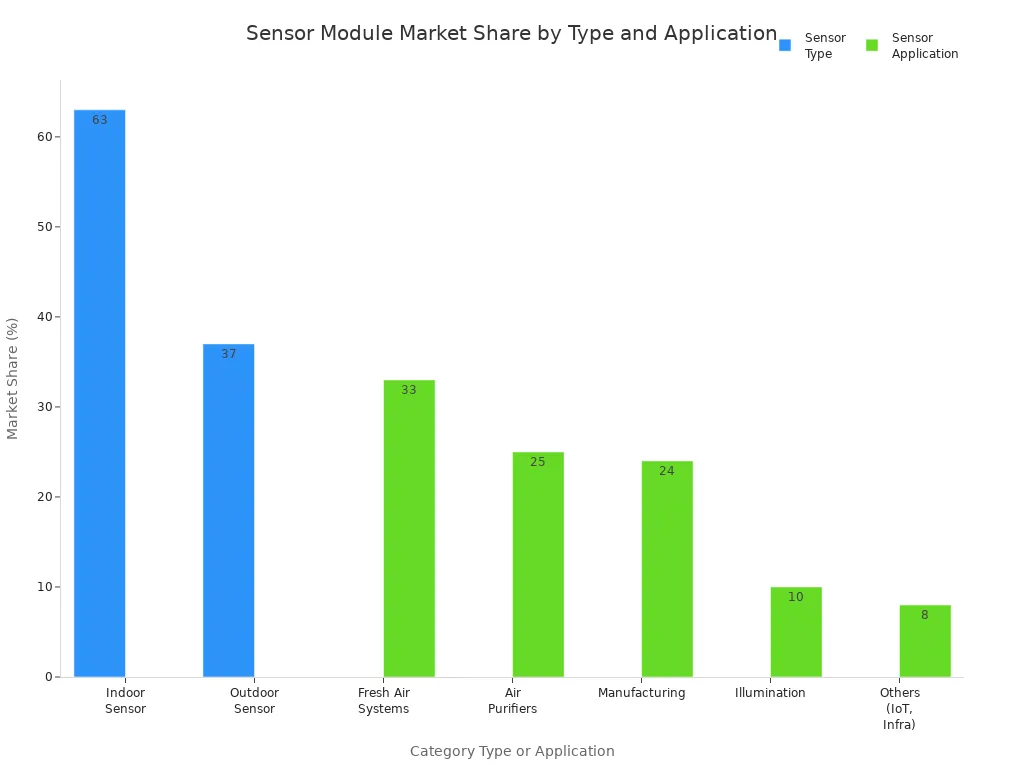
|
Category Type/Application |
Market Share (%) |
Key Details/Use Cases |
|---|---|---|
|
Indoor Sensor Modules |
63 |
Most common because of smart homes, air purifiers, fresh air systems, and use in homes and businesses |
|
Outdoor Sensor Modules |
37 |
Used for roads, factories, checking the environment, work areas, and public safety |
|
Fresh Air Systems |
33 |
Used in new buildings to help with air quality and better airflow |
|
Air Purifiers |
25 |
Put in smart air purifiers to help clean air automatically |
|
Manufacturing |
24 |
Used to check air in factories, keep workers safe, and send alerts |
|
Illumination |
10 |
Used for smart lights that change brightness and save energy |
|
Others (IoT, Public Infra) |
8 |
Used for smart streetlights, air stations, and small low-power modules for IoT |
Main Types of Sensor Modules
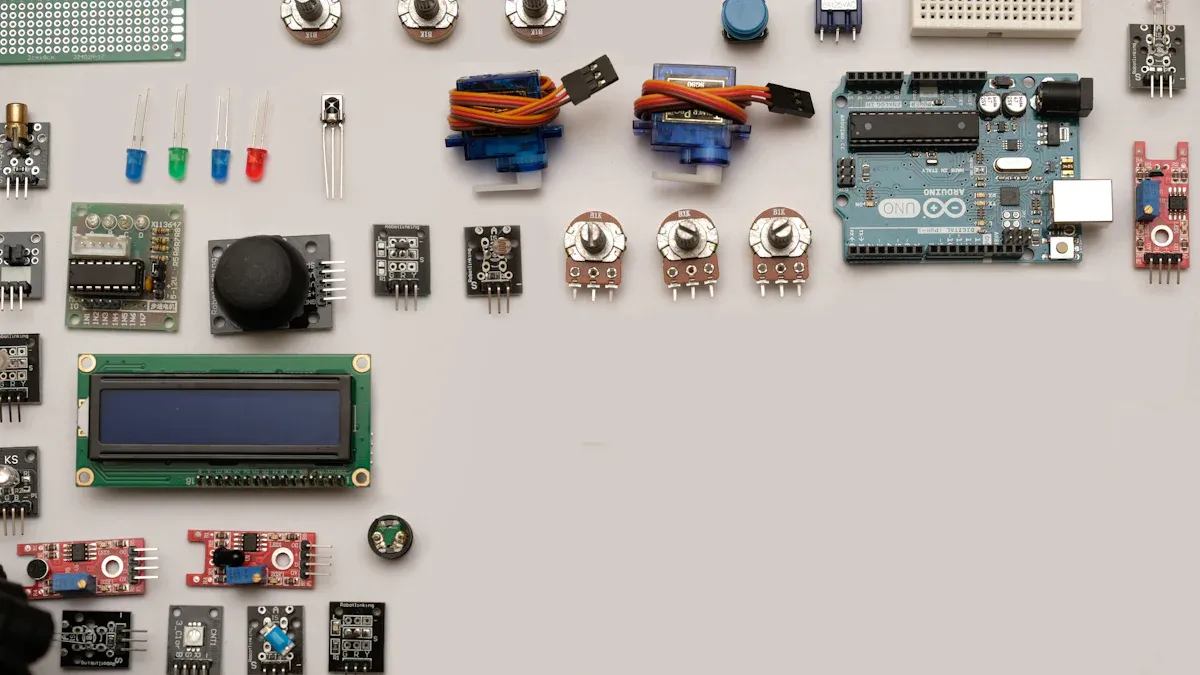
Sensor modules have many shapes and uses. Each one is made for a special job in electronics, automation, or IoT. The next parts talk about the main groups of sensor modules. They also explain what they do and how people use them. Sensor modules can be analog or digital. They might use I2C, SPI, UART, or analog output to talk to other devices.
Acceleration Sensor Modules
Acceleration sensor modules are also called accelerometer sensors. They measure how fast something speeds up or slows down. These modules use piezoelectric, piezoresistive, capacitive, or servo sensors. Each type works in its own way and has special strengths. The table below shows their main features and jobs:
|
Aspect |
Description |
|---|---|
|
Defining Characteristics |
These sensors follow Newton's second law and the piezoelectric effect. Types are piezoelectric, piezoresistive, capacitive, and servo. Important things to know are output type, axes, max value, sensitivity, bandwidth, resistance, and error. |
|
Primary Functions |
They turn acceleration into electrical signals. People use them in cars for airbags and ABS. They are also in game controllers, phone screens, compasses, GPS, step counters, cameras, and hard drives. |
|
Working Principle |
Piezoelectric sensors make voltage when crystals bend. Piezoresistive sensors change resistance when pressed. Capacitive sensors notice changes in capacitance. Servo sensors use feedback for better accuracy. |
|
Applications |
Used in car safety, electronics, navigation, health, cameras, and data safety. |
Acceleration sensor modules are important for safety, games, and navigation. They help find motion and direction. Many smart devices need them.
Capacitance Touch Sensor Modules
Capacitance touch sensor modules let people use devices by touching them. They sense when a finger or object gets close. This technology is in phones, tablets, and control panels. In factories, these modules use EMI shields, gaskets, and special films to work well.
Capacitance touch sensors can have covers like plastic, glass, or wood.
They work with sliders, wheels, and can sense nearby objects.
These modules resist chemicals, EMI, and dirt.
They can be sealed for tough places.
Software can change how sensitive and fast they are.
|
Sector |
Common Use Cases |
Key Benefits/Features |
|---|---|---|
|
Consumer Electronics |
Phones, tablets, laptops |
Very sensitive, multi-touch, easy to use |
|
Industrial Equipment |
Control panels, machine controls |
Strong, works in rough places |
|
Medical Devices |
Test machines, patient monitors |
Simple to use, quick response |
|
Automotive Displays |
Car screens, dashboard controls |
Multi-touch, safer and easier to use |
|
Retail & POS Systems |
Checkout systems, kiosks |
Easy interface, fast transactions |
Capacitance touch sensor modules are strong and flexible. That is why people use them in many products.
Fingerprint Sensor Modules
Fingerprint sensor modules keep things safe by reading finger patterns. They use thermal, ultrasonic, or capacitive sensors. Each kind gives strong security.
- Thermal sensors read heat patterns, which are hard to copy.
- Ultrasonic sensors make 3D images, even seeing sweat pores.
- Capacitive sensors are quick and accurate. They check if the finger is real.
- Live Finger Detection stops fake fingerprints from working.
Fingerprint sensor modules can store lots of fingerprints and match them fast. They are good for places that need high security. These modules are safer than many other biometric sensors.
Magnetic Sensor Modules
Magnetic sensor modules find magnetic fields and changes in position or angle. They use Hall-effect and magnetoresistance sensors. In cars, magnetic sensors check throttle, steering, gear, and motors. In factories, they help control motors, sense current, protect from overload, and run machines.
Magnetic sensor modules do not need to touch what they measure. They are very reliable and resist interference. This makes them great for factories and cars.
Magnetic sensor modules help run motors, watch energy use, and keep cars and machines safe.
Multiple Function Sensor Modules
Multiple function sensor modules put two or more sensor or I/O jobs in one module. This saves space and makes design easier. The table below shows how they compare to single-function modules:
|
Feature |
Multiple Function Sensor Modules |
Single-Function Sensor Modules |
|---|---|---|
|
Integration |
Have two or more sensor/I/O jobs |
Do just one job |
|
Channel Types |
Work with many channel types |
Usually only one type |
|
Programmability |
All channels can be programmed |
Not much can be changed |
|
Communication Interfaces |
Support many standards at once |
Usually only one standard |
|
Channel Count |
More channels overall |
Only one function type |
|
Operational Modes |
Many ways to work |
Only one way |
|
Space Efficiency |
Save space |
Need more modules |
|
Signal Processing Features |
Extra features like frequency measurement, PWM |
Basic signal processing |
Multiple function sensor modules can sense many things at once. They are good for big, complex systems.
Optical Sensor Modules
Optical sensor modules use light to find objects, measure distance, or sense changes. The most common types are through-beam, retro-reflective, and diffuse proximity sensors.
|
Sensor Type |
Description |
Typical Detection Range |
|---|---|---|
|
Through-Beam |
Has a separate emitter and receiver. Finds when the beam is blocked. |
Longest range, up to hundreds of meters. |
|
Retro-Reflective |
Emitter and receiver are together. Uses a reflector. |
Medium range. |
|
Diffuse Proximity |
Sends out IR light and sees reflection from an object. No reflector needed. |
Short range, very exact. |
Through-beam sensors are best for long distances and tough places. Retro-reflective sensors are good for medium distances, like on conveyor belts. Diffuse sensors are best for close, exact jobs.
Position Sensor Modules
Position sensor modules find where something is or how it moves. They are very important in robots and factories. They give exact feedback for roller gaps, valve movement, and actuator position.
- Position sensors work in tough places with dust, liquids, and heat.
- They have strong cases and can be mounted in different ways.
- Signal conditioners help them work better and last longer.
Position sensor modules help control and watch machines very closely.
Temperature Sensor Modules
Temperature sensor modules check temperature in many places. They are used in weather checks, HVAC, and factory controls. The table below shows how accurate and wide the range is for some sensors:
|
Sensor Module |
Temperature Accuracy |
Temperature Range (°C) |
|---|---|---|
|
DFRobot Gravity (SHT-C3 chip) |
±0.2°C |
-40 to 125 |
|
ioX-Connect Digital Temperature Sensor |
±1°C |
-40 to 125 |
|
ioX-Connect LoRaWAN Industrial Sensor |
±0.5°C |
-55 to 125 |
|
ioX-Connect Low Temperature Sensor |
±0.5°C (calibrated) |
-200 to 0 |

Temperature sensors are very accurate and can measure a wide range. They help control climate, heating, cooling, and protect equipment.
Proximity Sensor Modules
Proximity sensor modules find if something is close or not. They use ultrasonic waves, infrared, electromagnetic fields, or lasers. The table below shows how proximity sensors and distance-measuring sensors are different:
|
Attribute |
Proximity Sensors |
Distance-Measuring Sensors |
|---|---|---|
|
Primary Function |
Find if an object is there or not |
Give exact distance numbers |
|
Sensing Principles |
Use ultrasonic, infrared, electromagnetic, laser |
Use ultrasonic, laser, infrared, photoelectric, inductive |
|
Output Type |
Usually yes/no or rough distance |
Exact distance values |
|
Range |
Usually short |
Can be short or very long |
|
Accuracy |
Lower, just for detection |
Higher, for measurement |
|
Refresh Rate |
Medium to high |
Medium to very high |
|
Sensitivity |
Some change with material or color |
Changes by technology |
|
Size |
Different sizes |
Different sizes |
|
Cost |
Usually cheaper |
Can cost more |
|
Installation |
Usually easy |
Can be harder |
Proximity sensors are for finding if something is there, not measuring how far. They are cheap and easy to set up. People use them in robots, machines, and safety systems.
Chemical Sensor Modules
Chemical sensor modules find gases and chemicals in the air. They are important for safety in factories. The best types are electrochemical, NDIR, and catalytic combustible gas sensors.
|
Sensor Type |
Target Gases |
Detection Range |
Key Features |
|---|---|---|---|
|
Electrochemical Sensors (3 Series) |
CO, SO2, NO2, NO |
High concentration gases |
Lasts long, always checks |
|
Electrochemical Sensors (4 and 7 Series) |
CO, SO2, PH3, Formaldehyde, Vinyl Chloride |
Low concentration ranges |
Finds leaks, uses little power |
|
NDIR Sensors (4 Series) |
CO2, CH4 |
Finds tiny amounts |
Very sensitive, works in different temperatures |
|
Catalytic Combustible Gas Sensors |
Combustible gases |
Finds low explosion levels |
Good for factory checks |
- Electrochemical sensors find dangerous gases with little power and good detail.
- Multi-gas modules can check for many gases at once.
- Oxygen sensors help keep track of oxygen for safety.
Chemical sensor modules keep workers and machines safe by finding bad gases fast and correctly.
Sensor modules come in many types. Each one has special features and jobs. Knowing about the different types helps people pick the right sensor for their needs.
Electronic Sensor Modules in Automation and IoT
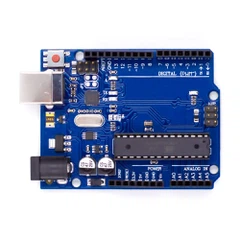
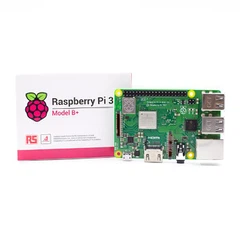
Electronic sensor modules are very important in many areas. They help with automation, cars, medicine, and checking the environment. These modules let systems collect data right away. They help machines make smart choices. Many iot sensors are used in smart homes and factories. Some examples are motion sensors, light sensor modules, gas sensors, pressure sensor modules, and water quality sensor modules. People also use these sensors in places that watch the environment. For microcontroller projects, some popular modules are ultrasonic sensors, accelerometers, magnetometers, soil moisture sensors, and thermistors. Raspberry pi sensors and arduino sensors are often used for learning and hobbies.
Motion Sensor Modules
Motion sensors find movement with infrared, ultrasonic, or microwave technology. You can see these sensors in security alarms, automatic doors, and smart lights. The table below shows how fast different motion sensor modules respond in iot and automation:
|
Sensor Module |
Typical Response/Refresh Time |
Notes/Additional Info |
|---|---|---|
|
Sonoff SNZB-03 |
60 seconds |
User reports delays beyond official specs |
|
Philips Hue |
10 seconds |
Fastest refresh time, limited detection angle |
|
Aqara |
60 seconds (can be hacked to 5s) |
Hardware modification possible |
|
Osram |
60 seconds |
Standard refresh time |
|
Ikea |
97 seconds |
According to seller |
|
TREEYE |
120 seconds |
According to seller |
|
Autoeye |
180 seconds |
Longest refresh time |
|
ZM-35ZH-Q |
60 seconds |
According to seller |
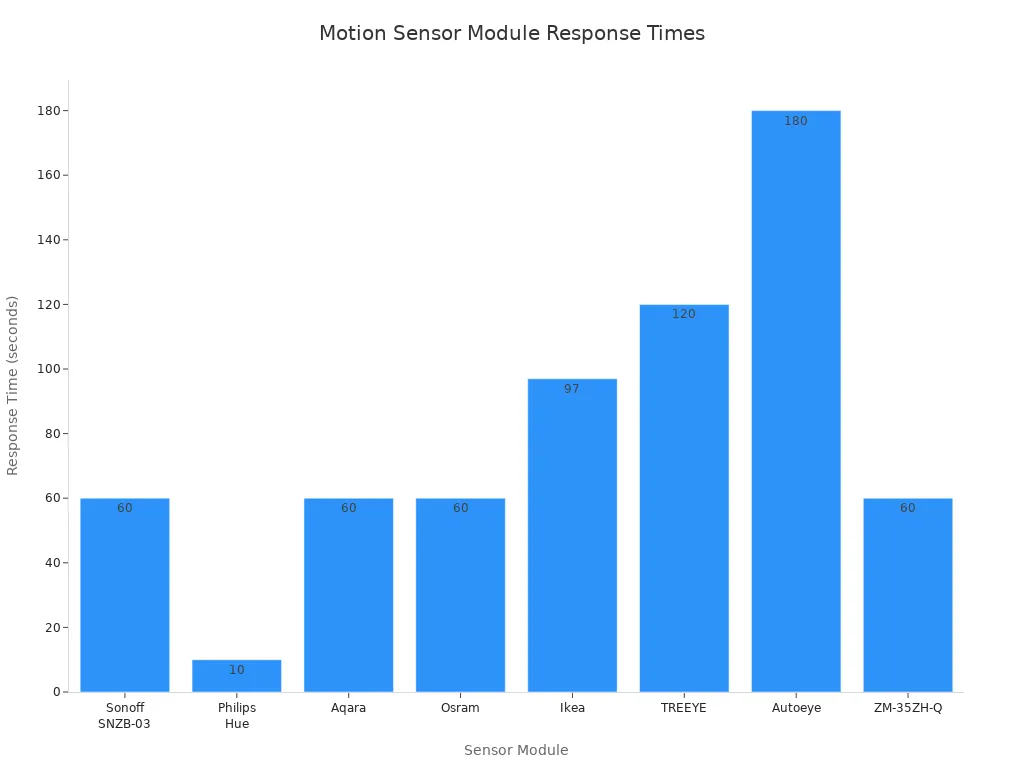
Motion sensors help keep homes and buildings safe. They also save energy by turning off lights when no one is there. Ultrasonic proximity sensors and infrared proximity sensors are often used for these jobs.
Light Sensor Modules
Light sensor modules check how much light is in a place. These sensors help smart buildings use less energy. If sunlight comes in, the system will dim or turn off the lights. Iot sensors like these work with occupancy sensors. This makes sure lights only stay on when needed. Sensor-per-fitting technology lets each light change based on its own sensor. This makes people more comfortable and saves power.
Gas Sensor Modules
Gas sensor modules find bad gases in the air. These sensors are important for safety in factories and homes. Iot sensors can check for gases like carbon monoxide, methane, and smoke. They send alerts if the air is not safe. Many smart sensors can also check humidity and temperature for better results.
Pressure Sensor Modules
Pressure sensor modules check air or liquid pressure. In cars, these sensors watch fuel tanks, coolant, and airbags. For example, barometric sensors in fuel tanks measure pressures from 40 to 115 kPa. Other pressure sensors can measure much higher pressures. These modules help keep cars and machines safe.
Water Quality Sensor Modules
Water quality sensor modules check if water is clean and safe. These sensors measure pH, dissolved oxygen, turbidity, temperature, and more. Multiparameter sondes have many sensors in one device. They give quick and correct results and can store data for a long time. Some advanced iot sensors use artificial intelligence to get better and faster results.
Electronic sensor modules like soil moisture sensors, humidity sensors, and ultrasonic sensors are very important for smart farming, home automation, and checking the environment. Raspberry pi sensors and arduino sensors help people make their own iot and automation projects easily.
Different Types of Sensors and Their Applications
Analog Sensor Modules
Analog sensor modules make signals that change smoothly. These signals match changes in things like temperature or pressure. Factories use analog sensors to watch how machines work. Robots use them to know where they are and how they move. These sensors help robots and vehicles get feedback right away. Current signals like 4-20 mA are strong against noise. They give good data in busy places. Analog modules also help with batteries and servo drives. This makes robots work better.
- Analog sensors need extra steps before controllers use the data.
- They measure things very closely, which helps with hard jobs.
- People use them in smart factories, robots, and checking the environment.
Digital Sensor Modules
Digital sensor modules change measurements into digital signals. These signals are easy to save, use, and send. Digital sensors use simple parts and software. This helps them be accurate and not get mixed up by noise. They work well in smart gadgets and IoT systems. Many businesses use digital modules to collect data fast and help machines work on their own.
|
Sector |
Leading Use Cases for Digital Sensor Modules |
|---|---|
|
Smart Cities |
Traffic control, smart lights, air checks, parking, trash management |
|
Industrial IoT |
Machine care, robots, tracking things, safety checks |
|
Healthcare |
Watching patients, health wearables, tracking hospital items |
|
Agriculture |
Smart farming with soil, weather, and crop sensors |
|
Real Estate |
Building care, energy tracking, comfort for people |
Digital sensor modules help smart cities, health care, farms, and buildings. They let systems decide things fast and work better.
Communication Protocols (I2C, SPI, UART, Analog Output)
Sensor modules use different ways to talk to microcontrollers. The way they talk changes how fast they send data and how much power they use.
|
Protocol |
Data Rate |
Complexity |
Power Consumption |
Typical Sensors |
|---|---|---|---|---|
|
SPI |
High |
Medium |
Medium |
Accelerometers, gyroscopes, pressure sensors |
|
I2C |
Low-Med |
Low |
Low |
Temperature, humidity, environmental sensors |
|
UART |
Low-Med |
Low |
Low |
GPS modules, Bluetooth modules, serial cameras |
I2C lets many devices share one wire. SPI sends data fast but needs more wires. UART is good for talking between two devices. Analog output modules send smooth signals and need changing before use. Picking the right way to talk helps sensors work well with raspberry microcontrollers and other systems.
Sensor modules help check the environment. They measure air, soil, water, and noise. Sensor data goes through communication modules to the cloud. This helps people study the data and make smart choices. It also helps stop damage to the environment.
How to Choose Sensor Modules
Picking the right sensor modules is very important. You need to think about what your project needs. The sensor must work well with other devices. It should also be accurate and have the right range.
Application Needs
Each project is different. Engineers need to know what the sensor will measure. They must also think about where the sensor will be used. Some important things to look at are:
- What you want to measure, like temperature or motion.
- What the sensing part is made of, because this changes how fast and how well it works.
- The size and shape of the sensor, so it fits in the space and can handle the environment.
- How much power it uses, and if it saves energy or has a long battery life.
- What kind of signal it gives, like on-off, frequency, or analog.
- How the wires are set up, like 2-wire or 3-wire, which changes how you install it.
- Tip: Picking a sensor made for your job helps with special needs, like tough places or strict safety rules.
Compatibility and Integration
The sensor must work with the hardware and software you already have. If it does not fit, it can be hard and expensive to use. You might lose data, have slow systems, or face security problems. Testing helps make sure everything works together. Engineers should check if the sensor uses the right way to talk to other devices. It should also fit with the system's microcontrollers and software. Sensors that are modular are easy to upgrade and add to later.
|
Integration Factor |
Why It Matters |
|---|---|
|
Communication Protocol |
Makes sure data moves smoothly |
|
Hardware Fit |
Matches the size and power needed |
|
Software Support |
Makes it easy to use the data |
|
Scalability |
Lets you grow the system later |
Accuracy and Range
Accuracy and range are very important for many jobs. For example, laser sensors can measure very closely and reach far. This is needed for robots and finding materials. If the sensor is not accurate, the system may not work right. Engineers should pick sensors that match the job's needs. Cleaning and checking sensors often helps them work better.
Note: If you forget about the environment, power, or how things connect, you can get false alarms, slow answers, or broken sensors. Planning and checking often stops these problems.
- Knowing about different sensor modules helps people do better in electronics and automation. When you pick the right sensor, your project works more accurately and reliably. Studies show that understanding sensor types helps systems collect and use data well. This means smarter choices and better results.
- Pick the right thing to measure so the sensor fits the job.
- Make sure the sensor works in the right range to avoid mistakes.
- The sensor's accuracy should be good enough for the job.
- The total price can change which sensor you pick and how it works.
- How the sensor connects matters for using it with microcontrollers.
- The speed of data should match what the system can handle.
- Clear instructions help you set up and fix the sensor.
- Knowing about sensor module types helps you make smart choices and finish projects well.