



Can Raspberry Pi Drone Kit Fly Autonomously?
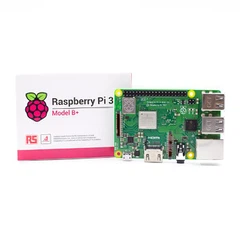
Yes, Raspberry Pi drone kits can fly autonomously, but the Pi itself doesn't control flight directly. Instead, it functions as a companion computer that sends commands to a separate flight controller like Pixhawk or runs ArduPilot firmware on specialized boards like Navio2. The level of autonomy ranges from simple waypoint navigation to advanced computer vision missions, depending on your configuration and programming.
The Companion Computer Architecture Explained
Most beginners misunderstand the Raspberry Pi's role in autonomous drones. The Pi doesn't replace your flight controller-it augments it.
A dedicated flight controller handles the critical real-time tasks of stabilization, motor control, and sensor fusion. The Raspberry Pi runs higher-level software that tells the flight controller where to go and what to do. Think of it like this: the flight controller is the pilot's hands and reflexes, while the Pi is the navigator with the map.
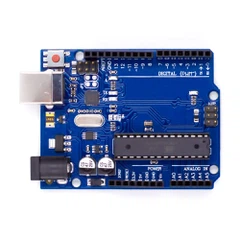
The standard approach uses ArduPilot-compatible flight controllers such as Pixhawk or APM, which connect to the Raspberry Pi via serial communication. This setup allows any ArduPilot flight controller to work with any Raspberry Pi variant through proper configuration.
The alternative architecture uses boards like Navio2 or Navigator that stack directly onto the Raspberry Pi. These systems run ArduPilot firmware directly on Linux rather than on a separate microcontroller. However, practitioners report that Navio2-based drones can be buggy, especially for autonomous missions, and cost roughly twice as much as Pixhawk alternatives.
What "Autonomous" Actually Means
The term "autonomous" covers a spectrum of capabilities, not a single feature.
Basic Autonomy: Pre-Programmed Missions
At the foundational level, autonomous flight means executing waypoint missions where the drone follows predetermined coordinates, scans areas, and returns home. Software tools like Mission Planner and QGroundControl let you plan these missions graphically, while DroneKit Python enables programmatic control through scripts.
A simple autonomous mission might look like this: takeoff to 15 meters, fly to GPS coordinate A, hover for 30 seconds, proceed to coordinate B, then land. The Raspberry Pi initiates these commands, and the flight controller executes them while maintaining stability.
Intermediate Autonomy: Sensor-Based Decisions
The next level involves adding sensors like LiDAR for obstacle detection, where the drone makes real-time decisions based on environmental data-such as landing when detecting an obstruction. Precision landing using computer vision falls into this category, where OpenCV scripts track visual markers and guide the drone to land within centimeters of a target.
Advanced Autonomy: AI-Driven Navigation
The most sophisticated implementations use the Pi's camera and TensorFlow-based object detection to control drone movement, enabling applications like tracking detected people or following specific objects. Projects have successfully used computer vision to detect humans in surveillance areas and report their GPS coordinates back to base stations.
Required Components Beyond the Kit
Understanding what you actually need prevents expensive surprises.
Core Hardware Stack
A functional autonomous setup typically includes: frame and motors, flight controller (Pixhawk or APM), electronic speed controllers, LiPo battery, GPS module with compass, RC transmitter for manual override, and the Raspberry Pi with camera. Pre-configured kits bundle these 40-plus components together, with prices typically around $1,000 for complete packages including the Raspberry Pi, while building from individual parts saves roughly $50.
Weight becomes critical. You must verify through motor thrust tables that your motor and propeller combination can lift the total weight at 50% throttle-otherwise the drone simply won't achieve stable flight.
Software Ecosystem
The software foundation consists of ArduPilot flight control code running on the flight controller, ground station software like Mission Planner or QGroundControl for configuration, and DroneKit Python for writing autonomous mission scripts on the Raspberry Pi. ArduPilot has evolved from simple Arduino code into a sophisticated C++ codebase with over 1 million lines of code, supporting integration with companion computers for advanced navigation.
Python becomes your primary tool, with libraries like DroneKit providing APIs for functions such as takeoff, landing, position control, and waypoint execution. The learning curve spans several areas: basic drone assembly and calibration, flight controller configuration through ground station software, Python programming, and Linux system administration for the Raspberry Pi.
Firmware and Protocol Considerations
Not all flight controllers support full autonomous control equally.
Betaflight, popular in FPV racing drones, supports MAVLink only for telemetry transmission, meaning it can send status data but cannot execute incoming flight commands-unlike ArduPilot and INav which support bidirectional MAVLink communication. Recent Betaflight versions introduced MSP Override mode as a workaround, but implementing autonomous flight on Betaflight remains significantly more complex than using ArduPilot-based systems.
MAVLink protocol serves as the communication backbone, allowing the Raspberry Pi to send flight commands and receive telemetry data including speed, altitude, battery status, and mode information. This protocol standardization explains why multiple ground station software options work interchangeably with ArduPilot systems.

Real-World Capabilities and Limitations
Autonomous Raspberry Pi drones excel at specific tasks while facing inherent constraints.
Proven Applications
Successful implementations include long-range control via 4G modems extending range to thousands of miles beyond traditional RC limits, drone delivery systems with precision landing on designated markers, and agricultural applications requiring automated waypoint surveys. Professional applications leverage sensors like IR-Lock for precision landing, achieving consistent accuracy within 15 centimeters of targets.
Technical Limitations
The Raspberry Pi architecture introduces specific challenges. Linux is not a real-time operating system, which can create timing issues for precise motor control-though this hasn't outweighed the advantages of processing power and standard development environments. Additionally, the system requires waiting for Linux to boot after battery connection and properly shutting down before disconnecting power to avoid file system corruption.
GPS-based positioning suffers from inherent drift, causing significant hovering instability especially in windy conditions since the system relies primarily on accelerometer data for position control. Indoor flights require alternative positioning systems like optical flow sensors or camera-based navigation to compensate for GPS unavailability.
Safety and Legal Framework
Autonomous flight introduces responsibilities beyond manual piloting.
Technical discussions consistently emphasize the necessity of maintaining manual override capability-you should never rely solely on the Raspberry Pi as the only control method. The RC transmitter must remain functional to regain control if autonomous systems fail. Forum experts advise considering applicable aviation laws in your jurisdiction before deploying autonomous systems.
Signal protocols matter for safety. Simply toggling GPIO pins doesn't constitute proper control signals-flight controllers expect specific PWM protocols that the Raspberry Pi must generate correctly. Improper signal implementation results in "No Signal" warnings and prevents motor activation, which builders frequently encounter when attempting direct GPIO control.
Development Path and Time Investment
Building autonomous capability follows a progression that realistic timelines help plan.
Phase One: Manual Flight (2-4 weeks)
Begin with mechanical assembly, flight controller calibration through ground station software, and achieving stable manual flight via RC transmitter. As forum veterans note, without properly functioning accelerometer and gyro integration, the drone will only flip and crash-these fundamentals must work before attempting any autonomous features.
Phase Two: Basic Autonomy (2-3 weeks)
Connect the Raspberry Pi to the flight controller via serial communication, install required Python libraries including DroneKit, MAVProxy, and pymavlink, and begin executing simple scripts for takeoff, hover, and landing. Setting up software simulators proves essential for safe development, allowing code testing without risking hardware crashes.
Phase Three: Advanced Features (ongoing)
Adding computer vision, complex mission logic, or custom sensors requires deeper expertise. Expect to invest time learning OpenCV for image processing, understanding communication protocols for additional sensor integration, and developing robust error handling for autonomous operations.
Alternative Approaches Worth Considering
Several paths lead to autonomous flight with different trade-offs.
Purpose-built educational kits like DuckieDrone DD24 provide third-generation open platforms specifically designed to teach autonomous flight concepts, complete with undergraduate-level curricula and community support. Micro drone variants using Raspberry Pi Zero reduce costs to around $600 while maintaining ArduPilot compatibility and 20-minute flight times despite weighing just 450 grams.
For those willing to tackle advanced development, projects like Raspilot implement flight control entirely on Raspberry Pi without separate microcontrollers, connecting GPIO pins directly to ESCs and sensors-though this requires strong C programming skills and understanding of control theory.
Frameworks like Clover reduce entry barriers by providing pre-configured Raspberry Pi images with ROS integration, allowing control via simple Python APIs after basic assembly-simulators let you test code in virtual environments before risking real hardware.

Cost Analysis Beyond Hardware
Budget for more than component prices when planning autonomous drone projects.
Direct Costs
Building from individual components typically requires $400-500 for necessary equipment, while comprehensive kits with video manuals cost approximately $1,000. Micro variants start around $600, while professional development kits with extensive documentation reach similar price points to full-size versions.
Hidden Investments
Time constitutes your largest expense. Practitioners report that problematic hardware choices, particularly with boards like Navio2, can waste hours on debugging hardware-level issues that don't occur with Pixhawk-based systems. Software learning curves vary dramatically-basic waypoint missions require moderate Python skills, while computer vision applications demand expertise in OpenCV, neural networks, and real-time image processing.
Troubleshooting experiences document spending days discovering issues like power distribution problems where Pixhawk won't boot unless specific jumper pins connect properly. These learning experiences, while valuable, consume significant time that documentation may not fully prepare you for.
Making the Decision
Raspberry Pi drone kits deliver genuine autonomous capabilities, but success requires matching expectations to reality. You're not buying an out-of-box autonomous system-you're acquiring a development platform that can become autonomous through proper configuration and programming.
The architecture works: flight controller handles stabilization, Raspberry Pi handles intelligence, and software frameworks provide tested foundations. Projects have successfully demonstrated everything from simple waypoint navigation to sophisticated computer vision applications.
Your fit depends on three factors: technical comfort with Linux, Python, and debugging; time availability for a multi-week learning curve; and realistic expectations about autonomy levels achievable with hobbyist budgets. Commercial drone delivery companies have proven the technology works at scale using these same ArduPilot foundations, but they employ teams of engineers-your solo project will be more modest in scope.
The question isn't whether Raspberry Pi drones can fly autonomously. They demonstrably can. The real question is whether you're prepared to build and program that autonomy yourself.
Frequently Asked Questions
Can I skip the separate flight controller and use only Raspberry Pi?
Technically possible but inadvisable for most builders-projects like Raspilot demonstrate pure Raspberry Pi flight control, but they require strong C programming skills, deep understanding of control theory, and careful attention to Linux's real-time limitations. The standard Pixhawk companion approach proves far more reliable and accessible.
How much Python programming do I need to know?
Basic Python sufficiency includes understanding functions, variables, and importing libraries-DroneKit's API provides high-level commands like vehicle.simple_takeoff(altitude) that abstract complex details. Advanced missions requiring computer vision or custom algorithms demand intermediate-to-advanced Python skills.
Will this work indoors without GPS?
GPS-based autonomous flight fails indoors due to satellite signal loss-you'll need alternative positioning systems like optical flow sensors, depth cameras, or visual odometry. Some frameworks like Clover specifically support camera-based indoor flight through integration with positioning sensors.
What flight time can I expect with a Raspberry Pi onboard?
Flight time depends heavily on total weight and battery capacity-typical 3S LiPo batteries of 3000-6000mAh provide varying duration, but battery capacity doesn't scale linearly with flight time due to the added weight. Well-optimized micro builds achieve approximately 20 minutes on single charges.