



Can Raspberry Pi Arcade Kit Run Games?
Your $35 computer can't handle Cyberpunk 2077, but it'll run Pac-Man better than the original arcade cabinet did in 1980.
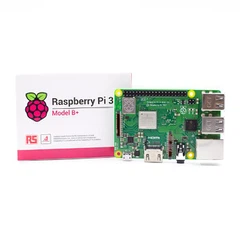
That's the weird reality of Raspberry Pi arcade kits. While gaming PCs chase photorealistic graphics and ray tracing, these miniature boards excel at something different: recreating decades of gaming history with hardware that fits in your palm. The Pi 4-released in 2019 with just 4GB of RAM-handles thousands of classic arcade titles smoothly, from early 1980s sprites to complex 1990s fighters. But there's a performance cliff nobody mentions until you hit it.
Game compatibility isn't about yes or no. It's about which generation you're targeting and how much you're willing to compromise.
What Games Actually Run Well
The Raspberry Pi 4 handles arcade games from three distinct eras with varying success. Pre-1990 arcade titles-your Donkey Kongs, Galaga, and Street Fighter II-run flawlessly. These games were designed for hardware far weaker than a modern Pi, and emulators like MAME 2003 handle them without breaking a sweat.
1980s arcade golden age: Near-perfect emulation. Games like Pac-Man, Donkey Kong, and early beat-'em-ups run at full speed with accurate sound. The Pi 4's quad-core processor easily handles these single-threaded games that originally ran on custom arcade boards with mere kilobytes of RAM.
Early-to-mid 1990s: Strong performance with occasional hiccups. Neo Geo titles, Mortal Kombat, and most Capcom fighters work well on FBNeo or MAME 2016. Some users report Marvel vs. Capcom 2 runs acceptably on Pi 4, though you might see frame drops during particle-heavy super moves.
Late 1990s 3D arcade games: This is where things get complicated. Model 2 and Model 3 arcade boards (Sega's Daytona USA, Virtua Fighter) push the Pi 4 to its limits. Some work with overclocking, others don't run at all. The Raspberry Pi 5, with its improved CPU, handles these significantly better but still isn't perfect.
The performance gap between Pi models matters more than most buyers realize. While a Pi Zero can handle 8-bit and 16-bit console games, arcade emulation demands more processing power. The Pi 3 struggles with anything beyond early 1990s titles. The Pi 4 became the minimum viable option for serious arcade emulation when it launched. The Pi 5, released in late 2023, pushes the boundary further-early PlayStation and Dreamcast emulation now run at playable framerates.
Hardware Reality Check
Arcade kits marketed as "complete solutions" rarely tell you about the power supply problem. The official Raspberry Pi 4 power adapter supplies 3A at 5V. That's usually enough for the Pi alone, but add illuminated arcade buttons, a 7-inch display, and an amplifier for audio, and you're pulling more power than the official supply can handle safely.
Users on the Raspberry Pi forums consistently report that cheap USB encoders work fine for button inputs, but cheap power supplies cause random crashes and corrupted SD cards. The difference between a $6 power supply and a $15 official one isn't just build quality-it's system stability.
Display choice affects performance more than specifications suggest. A 4:3 aspect ratio monitor matches classic arcade games better than widescreen displays, but here's the catch: most affordable 4:3 monitors today are old LCDs with VGA inputs. That means you need an HDMI-to-VGA converter, which introduces slight input lag. Not enough to ruin Pac-Man, but noticeable in timing-critical fighters.
Critical components most kits don't include:
Proper cooling: The Pi 4 throttles without active cooling during intensive emulation
Quality SD card: Class 10 minimum, but UHS-I cards (U1 or U3) prevent stuttering during game loading
Interface board: Options include USB encoders (cheapest), GPIO connections (moderate complexity), or IPac boards (premium, $40+)
Storage becomes a practical issue faster than expected. RetroArch and EmulationStation combined need about 1.5GB. Classic arcade ROMs are small (most under 50MB), but if you're also running console emulators, that 32GB SD card fills up quickly. Many builders move to 128GB cards or external USB drives for their full game libraries.
Software and Setup Complexity
RetroPie dominates the Raspberry Pi arcade scene, but it hasn't released a new disk image since 2022. That means no official Pi 5 image exists yet-users must install it manually on top of Raspberry Pi OS. Batocera emerged as the alternative with native Pi 5 support and better Bluetooth controller handling.
The ROM situation creates immediate friction for newcomers. Emulators need specific ROM versions-MAME 2003 requires 2003-era ROM dumps, MAME 2016 needs updated versions. Mix them up and games simply won't load. The RetroPie community maintains compatibility lists, but navigating ROM versions feels like learning a second language.
Controller configuration isn't plug-and-play despite marketing claims. RetroPie's input configuration works well for USB gamepads, but arcade-style controls connected via GPIO pins require editing configuration files. One forum user spent three hours debugging why his Player 2 joystick directions mapped incorrectly-he'd wired Player 1 and Player 2 controls in different orders.
Common configuration headaches:
Audio stuttering on HDMI output (fixed by forcing analog audio through the 3.5mm jack)
Screen tearing without v-sync settings adjusted
Button remapping resets after updates
Inconsistent controls between different emulators
The learning curve steepens if you want authentic arcade features. Coin insert buttons, start buttons that double as pause/menu access, and player switching all require custom setup. Advanced users run scripts that boot directly into specific games, bypassing the EmulationStation frontend entirely.

Build Quality Variations
Pre-made arcade kits from established sellers (Pimoroni's Picade line, for example) include proper interface boards and detailed instructions. The Picade Console Kit starts around $140 without the Pi, but you get tested hardware and customer support. Budget kits from Amazon or AliExpress offer similar components for half the price, but quality varies wildly.
The $35 "2-player arcade kit" bundles include buttons and joysticks that technically work but feel cheap compared to Sanwa or Happ components. Sanwa JLF joysticks (the arcade standard) cost $25-30 each but make a tangible difference in fighting games where precise inputs matter. Budget joysticks have larger dead zones and less precise cardinal directions.
Cabinet construction separates hobbyist projects from arcade-quality builds. Laser-cut kits provide precision-fit panels but cost more. DIY builds from MDF or plywood save money but require tools and woodworking skills. The Porta-Pi Arcade design-freely available online-became popular because it uses 1/4" plywood that home laser cutting services can handle affordably.
Wiring represents the hidden time sink. Commercial arcades used JAMMA harnesses with standardized connectors. Home builds use individual wires from each button and joystick direction to the encoder board. One builder reported spending 8 hours just on wiring a 2-player cabinet with 10 buttons per player-each connection must be stripped, crimped, and tested.
Performance Optimization
Overclocking extends capability but introduces risks. The Pi 4 ships at 1.5GHz but runs stable at 1.8-2.0GHz with active cooling. This extra headroom makes previously unplayable games like Killer Instinct run smoothly. However, higher clock speeds increase heat output and reduce hardware lifespan. The Pi 5 ships at 2.4GHz and overclocks to 2.8GHz, though most users find stock performance sufficient for arcade emulation.
Emulator choice affects performance as much as hardware. FBNeo runs faster than MAME 2016 for the same game library but may have less accurate emulation. The RetroPie community maintains spreadsheets showing which emulator works best for specific games-Tekken Tag runs better on MAME 2010 than 2016 despite the newer version theoretically being superior.
Performance tweaks that actually work:
Run 64-bit Raspberry Pi OS instead of 32-bit (10-18% performance improvement on average)
Disable desktop environment and boot directly to RetroPie
Use arm_freq and gpu_freq overclocking parameters instead of blanket overclocking
Enable "run-ahead" mode in RetroArch to reduce input lag
Use specific frameskip settings for problem games rather than global settings
RAM capacity matters less than beginners assume. The Pi 4 comes in 2GB, 4GB, and 8GB variants, but arcade emulation rarely needs more than 2GB. Extra RAM helps if you're running multiple applications simultaneously or using the Pi as a media center, but pure arcade gaming sees minimal benefit from 8GB over 4GB.
Current Limitations
The Pi 5 closed several performance gaps but created new complications. Early adopters discovered that some RetroPie features broke on the new hardware-screen tearing appeared in games that ran smoothly on Pi 4, and v-sync implementation behaves differently under Wayland versus X11. The community is still working through these issues in late 2024/early 2025.
Lightgun games remain problematic. Original arcade light guns tracked CRT electron beams, which don't exist on LCD displays. Modern solutions like the Sinden Lightgun work but require specific setup and don't feel quite like the original. The nostalgia factor takes a hit when Duck Hunt-style games need workarounds.
Network multiplayer isn't really a thing for arcade emulation. While technically possible, the latency requirements for fighting games make online play frustrating. Local multiplayer works perfectly-that's what arcade cabinets were designed for-but don't expect to play Street Fighter Alpha 3 with someone across the internet.
Storage speed affects game loading but not gameplay. Moving from SD card to NVMe SSD via the Pi 5's PCIe connector makes EmulationStation launch faster and reduces game loading times, but once a game is running, there's no difference. For pure arcade gaming, a quality SD card remains
sufficient.

What Buyers Should Know
A functional Raspberry Pi arcade requires more than the Pi itself. Budget for:
Raspberry Pi 4 or 5: $35-80 depending on RAM
Power supply: $8-15 (official recommended)
MicroSD card (64GB minimum): $10-15
Arcade controls (buttons + joystick): $30-100 depending on quality
USB encoder or GPIO interface: $10-40
Display: $40-150 depending on size and type
Cabinet materials: $20-100 for DIY, $140+ for kits
Total realistic cost: $150-300 for a working single-player cabinet, $250-500 for two-player with quality components. Commercial pre-built units start around $300 and go up to $700+ for premium builds like the Picade Max.
The Pi 5 makes sense if you want to play later-generation arcade games or plan to emulate Dreamcast/PS1 alongside arcade titles. For classic arcade gaming up through the mid-1990s, the Pi 4 remains fully capable and costs less.
Software setup takes longer than assembly. Physical construction might take 4-8 hours for a first-time builder. Software configuration, controller mapping, and ROM organization easily consume another 10-20 hours. Factor this into your project timeline.
Why People Still Build These
Raspberry Pi arcades survive because they solve a problem commercial retro consoles don't: authentic control schemes. Playing Street Fighter on a standard gamepad works, but it doesn't feel right. An arcade stick with proper buttons recreates the original experience in ways a controller never will.
The customization factor matters to enthusiasts. Want a Golden Tee cabinet with a trackball? Possible. Prefer a vertical monitor for shoot-'em-ups? Doable. Commercial solutions force compromises; DIY builds let you prioritize what matters to you.
Cost per game becomes absurdly low. Once you've built the hardware, adding games means downloading a ROM file. A full MAME library spans thousands of titles-more gaming than any one person could reasonably play through. The per-hour entertainment value beats modern gaming by orders of magnitude.
Frequently Asked Questions
Will a Raspberry Pi Zero run arcade games?
The Zero handles 8-bit and early 16-bit games but struggles with anything requiring more processing power. Arcade emulation needs the multi-core CPUs found in Pi 3 or newer models.
Do I need programming skills to build a Raspberry Pi arcade?
No programming required, but you need comfort with following technical instructions and troubleshooting basic Linux issues. The RetroPie documentation covers most common problems.
Can I play modern indie games on a Raspberry Pi arcade?
Some indie games run on ARM Linux, but most require x86 processors. Stick to emulated retro games for best results.
How legal is downloading arcade ROMs?
Downloading copyrighted ROMs violates copyright law in most jurisdictions, even for games you own physically. Some abandonware exists in legal gray areas. Research your local laws.
Will this work with my old CRT monitor?
Yes, but you'll need appropriate adapters (HDMI to VGA/composite) and may need to adjust resolution settings. CRT displays actually reduce input lag compared to modern LCDs.
Can I add more games after building the cabinet?
Yes, easily. Transfer ROM files via USB drive, network sharing, or direct SD card access. Adding games is simpler than initial setup.
The Verdict
Raspberry Pi arcade kits run games remarkably well within their design parameters. You're not getting PS5 graphics, but that's not the point. What you get is thousands of classic arcade titles, authentic controls, and the satisfaction of building something with your hands.
The Pi 4 handles the vast majority of arcade games people actually want to play-everything from Pac-Man to Marvel vs. Capcom 2 runs smoothly. The Pi 5 extends compatibility into more demanding territory but costs more. For most builders focused on classic arcade gaming, the Pi 4 hits the sweet spot of capability and value.
Expect to spend $200-400 total and invest 15-30 hours in setup and troubleshooting. If that sounds reasonable for a custom arcade machine that plays thousands of games, this project makes sense. If you want plug-and-play simplicity, commercial retro consoles might serve you better.
The community support remains strong. When problems arise-and they will-forum posts and YouTube tutorials provide solutions. This project succeeds because thousands of builders have documented their experiences and shared their knowledge.
Your $35 computer won't run modern AAA games. But for recreating the golden age of arcades in your basement? It's more capable than you'd think.