



Introduction
Welcome to the fascinating world of electronics! In our daily lives, we come across various electronic devices like TVs, computers, mobile phones- all these devices are built by assembling several basic electronic components together in a meticulously planned manner. This article aims to simplify the complexity associated with these elements, making it easier for beginners as well as enthusiasts to understand these basic bricks of electronics.
Types of Electronic Components
There are multiple types of electronic components, each having their unique functionality. Let's analyze a few of them:
Resistor: It inhibits the flow of electrons, thus controlling the current or creating a voltage drop.
Capacitor: These are used to store and release energy, acting somewhat like a battery.
Transistor: Transistor acts as a switch and an amplifier. It can turn a low input into a higher output, hence widely employed in signal amplification.
Diode: It allows current to flow in one direction and blocks it in the opposite direction.
Operational Amplifier: Also known as op-amp, it can perform mathematical operations, making it pivotal in analog electronics.
Resistor Array: It is a combination of several resistors in one package. It's essentially a compact, one-stop solution for your resistance needs.
Logic Gate: These are the building blocks of digital electronics, helping realize logical operations, such as AND, OR, NOT, etc.
Function of Basic Electronic Components
The functions of these electronic components can be mysterious for beginners, but they are fundamental in operating our everyday electronic devices. Here are the roles they play:
Resistor: It offers resistance to the flow of electric current. High resistance means low current flow, and vice-versa. They are used in circuits to control the amount of current.
Capacitor: Functions as a short-term energy storage component in the circuit; it charges up when current flows through it and discharges itself when the circuit is not complete.
Transistor: It switches or amplifies electrical output. A small current at its base controls a larger current at collector & emitter leads.
Diode: Its function is to limit the direction of flow of charge. Diodes can function as a rectifier, which converts AC to DC.
Operational Amplifier: Op-amps can amplify weak signal making them suitable in audio, video, and signal processing.
Resistor Array: They conveniently handle multiple resistances across various circuits.
Logic Gates: As the basic building blocks of digital circuits, these gates aid in creating digital hardware like computer processors and memory.
Types of Controller Boards
Microcontrollers are the heart of any digital device, controlling every task performed by the device. These microcontrollers are present in a circuit board called Controller Board. Here are some commonly used controller boards:
Single Board: Single Board Computers (SBC) are the earliest type of controller board that contains a single circuit board with all the necessary components to make a computer.
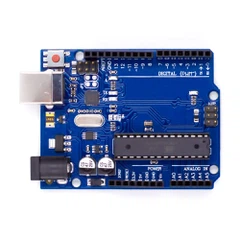
Arduino: Arduino boards are based on Atmel's AVR microcontrollers and are widely used in school education and prototyping because of their easy programming and rich peripheral libraries.
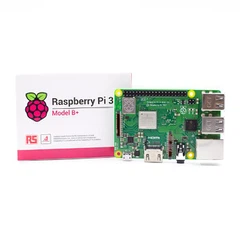
Raspberry Pi: The Raspberry Pi is a small, powerful, and versatile controller board that can perform tasks like your desktop PC. It's best known for its performance and affordability.
Micro:Bit is a pocket-sized computer designed to introduce users to coding and hardware interaction. It features an LED light display, buttons, sensors, and various input/output capabilities that can be programmed and physically interacted with. It is a versatile tool that can be used to inspire students and help them understand the power of technology in the real world. The Micro:Bit is supported by various code editors and tools such as Microsoft MakeCode, the Micro:Bit Python Editor, and mobile apps, making it easy for beginners to start coding. The latest version of the Micro:Bit has additional features such as sound sensing and playback capabilities. Overall, the Micro:Bit is a powerful educational tool that introduces users to coding and hardware interaction in a fun and engaging way.
FAQ
FAQs are a great way to address common questions that beginners or enthusiasts may have about basic electronic components. Here are a few:
What is the most fundamental unit of an electronic system? The most fundamental unit of an electronic system is an electronic component like resistor, capacitor, diode etc.
What is the role of a resistor? A resistor restricts the flow of electricity in a circuit, offering resistance.
Why do we need a diode? Diodes are used to control the direction of the flow of electricity.
What does a transistor do? A transistor, operating as a switch or an amplifier, controls a large current with a small one.
When is a logic gate used? Logic gates are used for creating digital electronics like computer processors and memory.
Conclusion
To sum up, understanding basic electronic components, their types, functions, and associated symbols is crucial for anyone keen on learning electronics - be it a hobbyist, student, or professional. With this guide, we hope to have made these concepts simpler for you. Remember, every advanced electronic device that we marvel at today, beginning from a mobile phone to a teleportation device, is built using these basic blocks of electronics. So keep learning, stay curious, and have fun exploring the fantastic world of electronics!